

Oct . 25, 2025 10:25 Back to list
Soft Seal Gate Valve - Leak-Tight & Corrosion-Resistant
Electric Soft Seal Gate Valve: field notes from the plant room
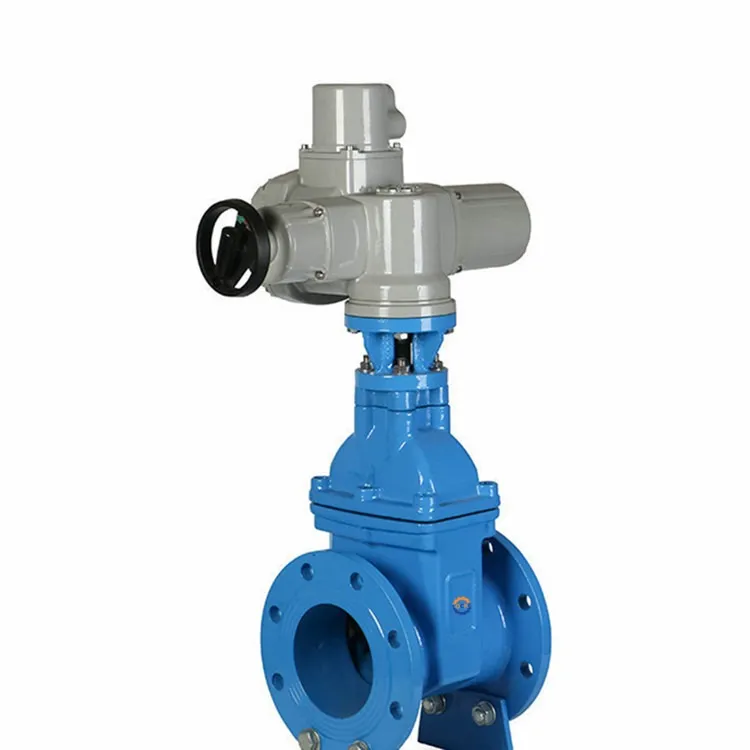
If you’ve spent time with operators at commissioning, you know why a Soft Seal Gate Valve is often the quiet hero. The top-mounted structure cuts down on body bolts, shrinks leak paths, and—honestly—saves techs a headache. This model from Botou, Cangzhou (No.17, Building 11, Hardware Building Material City, Hebei, China) leans into that simplicity with an elastic gate plate that deforms just enough for a tight seal. Less torque, fewer callbacks.
Why the market is shifting
Utilities and HVAC integrators tell me they’re replacing aging metal-seated gates at record speed. Water loss targets, desal retrofits, district heating loops—everyone wants lower leakage classes and smarter actuation. The electrified, resilient-seated design hits that sweet spot: reliable shutoff, less elastic fatigue, and corrosion resistance that actually holds up in brackish lines. Trends? Digital torque logging, lightweight bodies, and “install-and-forget” service intervals.
Core advantages (real-world)
- Top-mounted design: fewer bolts, easier stem packing access, faster actuator swap.
- Elastic gate plate: micro-deformation for repeatable, bubble-tight sealing.
- Light switch feel: lower operating torque means smaller actuators and energy savings.
- Good elastic memory: the seal “comes back” after thermal cycles—many customers say it’s a quiet upgrade they notice months later.
Product specs (typical, ≈ values)
| Product | Electric soft seal gate valve (Soft Seal Gate Valve) |
| Size range | DN50–DN1200 (2"–48") |
| Pressure class | PN10/16/25; ANSI Class 150 |
| Body/Bonnet | Ductile iron (EN-GJS-450-10) or WCB; fusion-bonded epoxy ≈250 μm |
| Gate coating | EPDM or NBR encapsulation; potable-water compliant options |
| Stem | SS 2Cr13/SS420 or 304; anti-corrosion sleeve optional |
| Actuator | Electric, on/off or modulating; 24V/110V/220V/380V; IP67, optional IP68 |
| Leakage rate | Zero visible leakage to ISO 5208 Rate A / API 598 seat test |
| Service life | ≈50,000 cycles (lab); real-world use may vary |
Process and testing
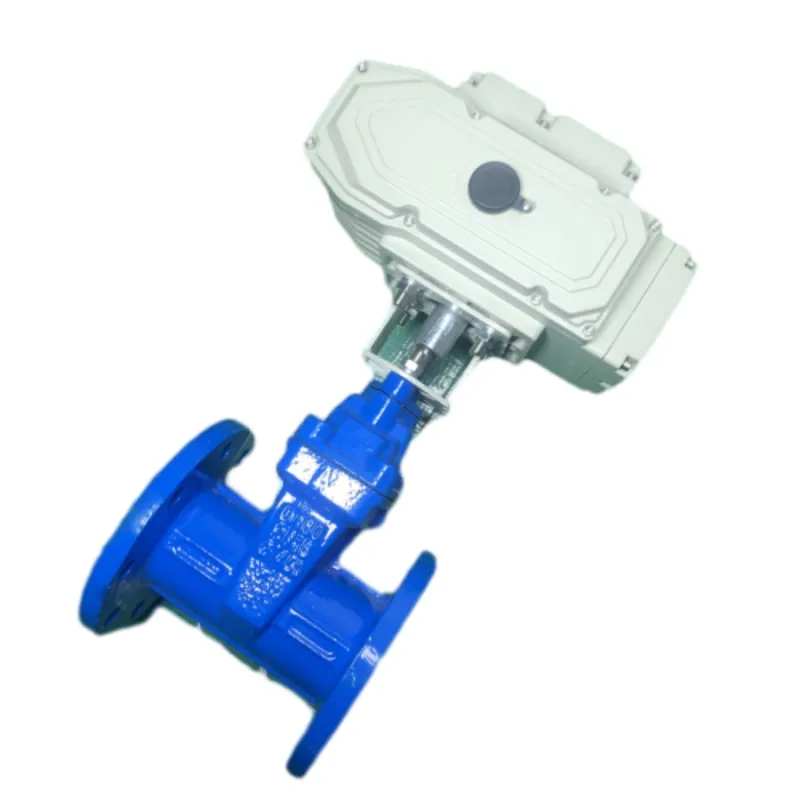
Materials are batch-inspected, cast, and machined; gates are elastomer-encapsulated with controlled cure. Seats/stems lapped, epoxy applied electrostatically. Hydrostatic shell and seat tests follow ISO 5208 and API 598; many lots are double-checked to GB/T 13927. Torque mapping and partial-stroke tests run on actuators. I’ve seen factory logs showing ≤0 ml/min leakage at 1.1× rated pressure—impressive for a resilient seat.
Where it fits
- Municipal water and wastewater (AWWA-style profiles)
- District heating/cooling loops
- Desalination pretreatment and RO feed isolation
- Fire protection mains (check local approvals)
- Industrial general service lines
Vendor snapshot (quick take)
| Vendor | Strengths | Considerations |
|---|---|---|
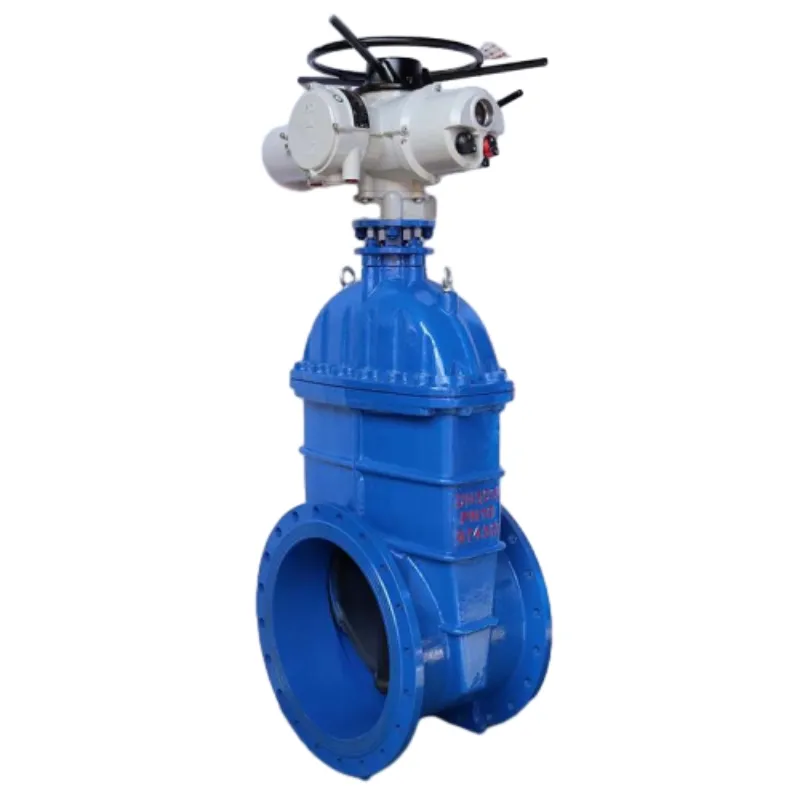
| STR Machinery (Botou) | Top-mounted design, responsive actuator options, competitive lead time | Global certifications vary by lot—confirm before tender |
| OEM A (EU) | Broad certifications, deep spares catalog | Premium pricing; longer build-to-order windows |
| Generic import | Low upfront cost | Inconsistent elastomer quality; documentation gaps |
Customization and compliance
Soft Seal Gate Valve builds offered with EPDM (potable), NBR (hydrocarbon splash), special coatings for buried service, rising/non-rising stem, flanged or grooved ends, and smart controls (4–20 mA, Modbus). Typical certs requested: ISO 9001, material traceability EN 10204 3.1, AWWA C509/C515 design conformance, and hydro tests to ISO 5208/API 598.
Two quick case notes
- Coastal RO plant: DN600 valves with EPDM seats showed zero visible leakage after 10,000 cycles; operators liked the lighter actuator torque—“no more breaker trips.”
- District heating retrofit: PN25 version cut maintenance visits by ~30% over a winter season; surprisingly quiet closures even at high delta-P.
Standards referenced
AWWA C509/C515, ISO 5208, API 598, EN 1074, and GB/T 13927 are the usual benchmarks. Always align with project specs—real sites don’t all read the same book, I guess.
-
Ball Check Valve Questions About Connection, Parts and MaintenanceNewsNov.02,2026
-
Butterfly Valve Wholesale FAQ: Types, Specifications & Selection QuestionsNewsOct.28,2026
-
Choosing Guide Rail: Application Fit and Specification ChecksNewsOct.23,2026
-
Choosing a Measuring Micrometer: Application Fit and Specification ChecksNewsOct.23,2026
-
Choosing a Level Ruler: Application Fit and Specification ChecksNewsOct.23,2026
-
Choosing a Ring Gauge: Application Fit and Specification ChecksNewsOct.23,2026
 Afrikaans
 Albanian
 Amharic
 Arabic
 Armenian
 Azerbaijani
 Basque
 Belarusian
 Bengali
 Bosnian
 Bulgarian
 Catalan
 Cebuano
 Corsican
 Croatian
 Czech
 Danish
 Dutch
 Esperanto
 Estonian
 Finnish
 French
 Frisian
 Galician
 Georgian
 German
 Greek
 Gujarati
 Haitian Creole
 Hausa
 Hawaiian
 Hebrew
 Hindi
 Miao
 Hungarian
 Icelandic
 Igbo
 Indonesian
 Irish
 Italian
 Japanese
 Javanese
 Kannada
 Kazakh
 Khmer
 Rwandese
 Korean
 Kurdish
 Kyrgyz
 Lao
 Latin
 Latvian
 Lithuanian
 Luxembourgish
 Macedonian
 Malgashi
 Malay
 Malayalam
 Maltese
 Maori
 Marathi
 Mongolian
 Myanmar
 Nepali
 Norwegian
 Norwegian
 Occitan
 Pashto
 Persian
 Polish
 Portuguese
 Punjabi
 Romanian
 Russian
 Samoan
 Scottish Gaelic
 Serbian
 Sesotho
 Shona
 Sindhi
 Sinhala
 Slovak
 Slovenian
 Somali
 Spanish
 Sundanese
 Swahili
 Swedish
 Tagalog
 Tajik
 Tamil
 Tatar
 Telugu
 Thai
 Turkish
 Turkmen
 Ukrainian
 Urdu
 Uighur
 Uzbek
 Vietnamese
 Welsh
 Bantu
 Yiddish
 Yoruba
 Zulu
 English