

Mar . 24, 2026 01:45 Back to list
Understanding the Precision and Applications of Industrial Spirit Levels
Understanding the Precision of Industrial Spirit Levels
In countless industries, from construction and engineering to woodworking and machining, accuracy is paramount. Achieving precise measurements relies heavily on the quality of tools employed, and among these, the industrial spirit level stands as a cornerstone. This article delves into the world of spirit levels, exploring their types, applications, accuracy considerations, and how to choose the right one for your specific needs. Ensuring levelness is crucial for structural integrity, operational efficiency, and overall project success.
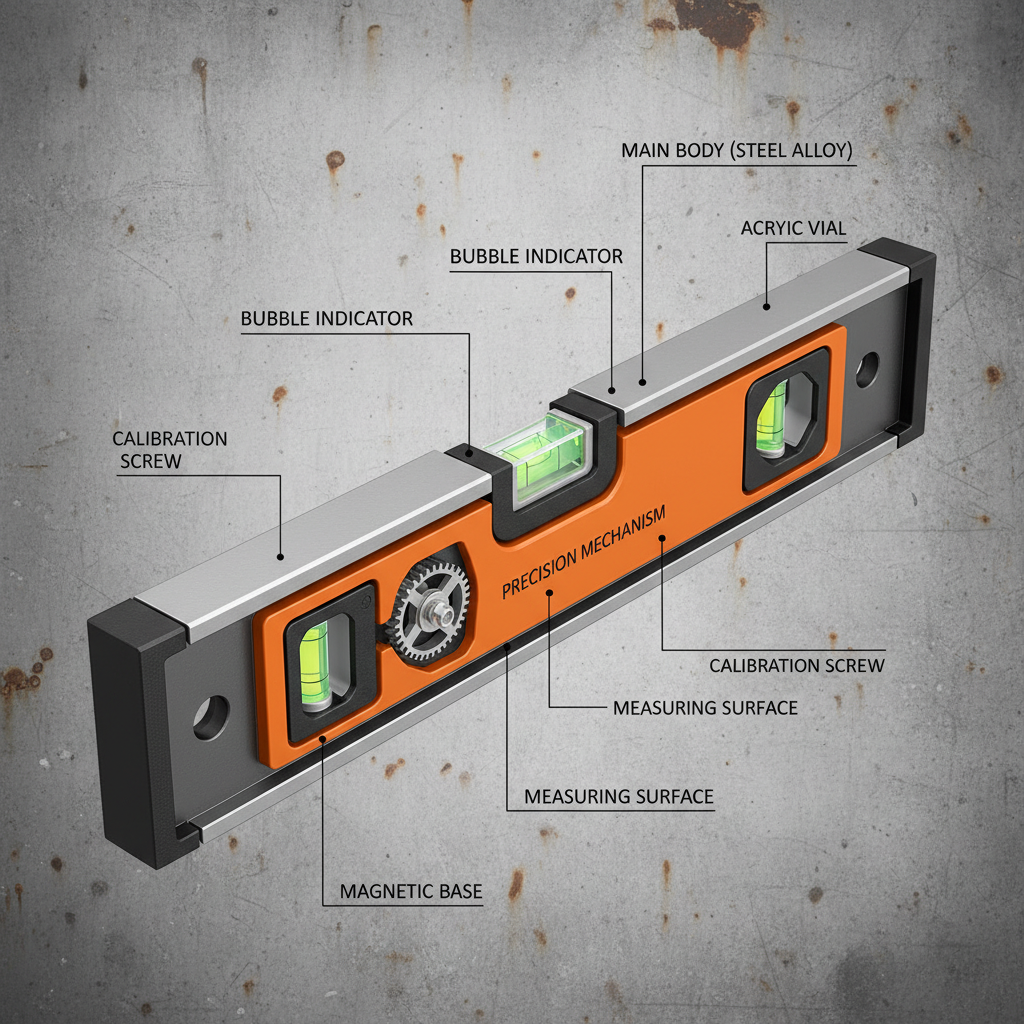
The Fundamental Principles of Spirit Levels
At its core, a spirit level utilizes the principle of fluid mechanics to indicate levelness. A curved glass or plastic vial, partially filled with a liquid (typically alcohol or mineral spirit) leaves an air bubble. When the surface is perfectly horizontal or vertical, the bubble will center within the vial's markings. The accuracy of this indication depends on the precision of the vial's curvature and the quality of its construction. Modern spirit levels often incorporate additional features like magnetic bases for attachment to metal surfaces and shock-absorbing end caps for increased durability. Understanding this basic principle is key to appreciating the importance of selecting a level built to exacting standards.
Key Takeaway: The centering of the bubble within the vial signifies a level surface, and the accuracy of the level directly impacts the reliability of measurements.
Types of Industrial Spirit Levels
The market offers a diverse range of spirit levels, each designed for specific applications. Post levels are ideal for general construction work, providing a clear view of the vial. Torpedo levels, with their compact size, are perfect for tight spaces and overhead applications. Line levels are used for establishing a level line over a distance, often used in surveying or long-distance alignment. Digital spirit levels provide a digital readout of the angle, offering increased precision and eliminating parallax errors. Choosing the right type depends on the complexity of the task and the required level of accuracy. SR Machinery provides a wide array of solutions.
Spirit Level Types:
• Post Levels: General construction.
• Torpedo Levels: Tight spaces, overhead work.
• Line Levels: Establishing level lines over distance.
• Digital Levels: High precision, digital readout.
Industrial Spirit Level Accuracy: What to Look For
Accuracy is typically measured in millimeters per meter (mm/m) or inches per foot. For general construction, an accuracy of ±0.5mm/m (±1/8 inch per foot) may suffice. However, for precision machining or critical alignment tasks, levels with an accuracy of ±0.1mm/m (±1/16 inch per foot) or better are essential. Factors influencing accuracy include the quality of the vial, the precision of the level’s frame, and proper calibration. Regularly calibrating your industrial spirit level is crucial to maintaining its accuracy over time. Consider levels with traceable calibration certificates for guaranteed precision.
Choosing the Right Spirit Level for Your Application
Consider the specific requirements of your tasks. If you’re working with heavy machinery, a level with a robust frame and magnetic base is essential. For delicate alignment work, a high-precision digital level is recommended. Pay attention to the vial’s visibility and readability, especially in low-light conditions. Look for features like shock-absorbing end caps and a durable carrying case to protect your investment. SR Machinery’s expert team can help you identify the perfect spirit level for your unique needs.
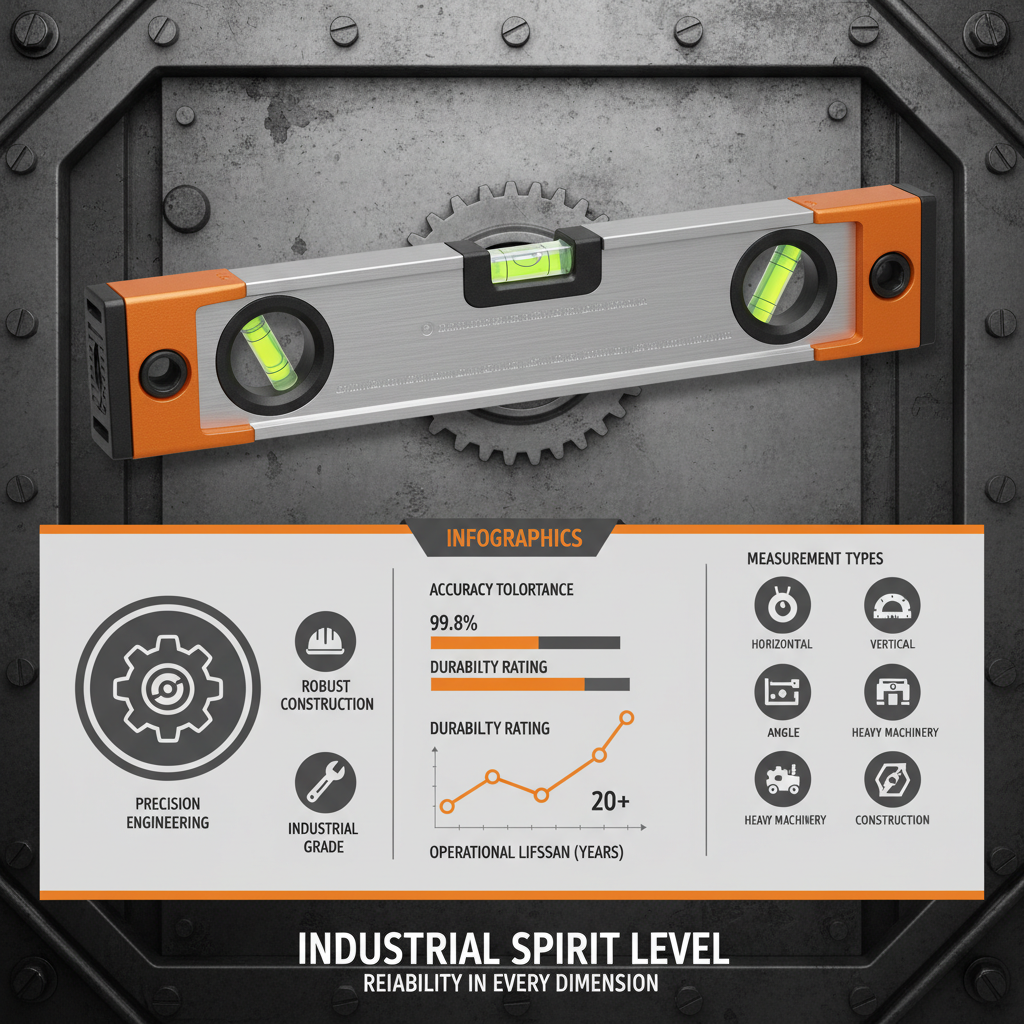
Maintaining Your Spirit Level for Long-Term Accuracy
Regular care and maintenance are crucial for preserving the accuracy of your spirit level. Avoid dropping or subjecting it to harsh impacts. Clean the surface regularly to remove dust and debris. Store the level in a dry, protected environment. Periodically check the level’s calibration against a known reference point. If you suspect the level is out of calibration, consider professional calibration services. A well-maintained spirit level is a valuable asset that will deliver reliable performance for years to come.
Conclusion: Investing in Precision
The industrial spirit level is an indispensable tool for any professional requiring accurate measurements. Choosing the right level, understanding its accuracy specifications, and maintaining it properly are key to ensuring reliable results. By investing in a quality spirit level, you’re investing in the precision and integrity of your work.
Frequently Asked Questions (FAQs)
What is the difference between a spirit level and a laser level?
While both tools help establish levelness, they operate differently. A spirit level relies on gravity and the principle of fluid mechanics, offering a direct visual indication. A laser level projects a laser beam, creating a reference line. Laser levels are often more convenient for longer distances and for transferring levels between different locations, but they require a power source and can be affected by bright sunlight. Spirit levels remain a reliable and cost-effective option for many applications, especially where precise short-range leveling is required.
How often should I calibrate my spirit level?
The frequency of calibration depends on usage and the required level of accuracy. As a general guideline, it’s recommended to calibrate your spirit level at least once a year, or more frequently if it’s subjected to rough handling or extreme temperatures. If you notice inconsistencies or suspect the level is inaccurate, calibrate it immediately. Professional calibration services can provide traceable certification of accuracy.
Can I use a spirit level on uneven surfaces?
A spirit level is designed to indicate levelness relative to gravity. If the surface itself is uneven, the level will simply show the angle of the surface, not whether it’s truly level. To achieve accurate leveling on an uneven surface, you may need to shim or adjust the surface to create a level plane before using the spirit level. Alternatively, a digital level with angle measurement capabilities can be used to determine the angle of the surface.
What materials are industrial spirit levels typically made from?
Industrial spirit levels are typically constructed from aluminum for its lightweight strength and corrosion resistance. High-end models may use more durable materials like cast iron for added stability and accuracy. The vial itself is usually made from glass or acrylic, while the end caps are often made from shock-absorbing rubber or plastic. The choice of material influences the level's durability, accuracy, and overall cost.
-
Ultimate Guide to Using a Professional Metre Spirit LevelNewsApr.16,2026
-
Ultimate Guide to Using and Choosing a Meter Spirit LevelNewsApr.09,2026
-
A Comprehensive Guide to Selecting the Ideal Meter Long Spirit Level for Accurate MeasurementsNewsApr.07,2026
-
Choosing the Perfect Metal Spirit Level for Accurate Measurements and ProjectsNewsApr.04,2026
-
Exploring the Diverse Levels of Spirits Quality and Production TechniquesNewsMar.31,2026
-
Understanding the Precision of a Level Spirit Level for Accurate MeasurementsNewsMar.28,2026
 Afrikaans
 Albanian
 Amharic
 Arabic
 Armenian
 Azerbaijani
 Basque
 Belarusian
 Bengali
 Bosnian
 Bulgarian
 Catalan
 Cebuano
 Corsican
 Croatian
 Czech
Czech
 Danish
 Dutch
Dutch
 Esperanto
 Estonian
 Finnish
 French
 Frisian
 Galician
 Georgian
 German
 Greek
Greek
 Gujarati
 Haitian Creole
 Hausa
Hausa
 Hawaiian
 Hebrew
 Hindi
Hindi
 Miao
Miao
 Hungarian
 Icelandic
 Igbo
Igbo
 Indonesian
 Irish
Irish
 Italian
 Japanese
 Javanese
 Kannada
 Kazakh
 Khmer
Khmer
 Rwandese
 Korean
 Kurdish
 Kyrgyz
 Lao
Lao
 Latin
Latin
 Latvian
 Lithuanian
 Luxembourgish
 Macedonian
 Malgashi
 Malay
Malay
 Malayalam
 Maltese
 Maori
Maori
 Marathi
 Mongolian
 Myanmar
 Nepali
 Norwegian
 Norwegian
 Occitan
 Pashto
 Persian
 Polish
 Portuguese
 Punjabi
 Romanian
 Russian
 Samoan
 Scottish Gaelic
 Serbian
 Sesotho
 Shona
Shona
 Sindhi
 Sinhala
 Slovak
 Slovenian
 Somali
 Spanish
 Sundanese
 Swahili
 Swedish
 Tagalog
 Tajik
Tajik
 Tamil
Tamil
 Tatar
Tatar
 Telugu
 Thai
Thai
 Turkish
 Turkmen
 Ukrainian
 Urdu
Urdu
 Uighur
 Uzbek
Uzbek
 Vietnamese
 Welsh
Welsh
 Bantu
Bantu
 Yiddish
 Yoruba
 Zulu
Zulu
 English