

Oct . 20, 2025 10:55 Back to list
Parallel Rulers for Sale – Precision Aluminum, Nav & Draft
Parallel Ruler Buying Guide: What Pros Check Before They Click “Order”
If you’re scanning the market for parallel rulers for sale, here’s the short version: materials, tolerances, and verification data matter a lot more than glossy photos. Based in No.17, Building 11, Hardware Building Material City, Botou, Cangzhou City, Hebei Province, China, STR Machinery has been pushing a practical balance—heavy-duty cast iron/steel for shop floors and magnesia-aluminum for lighter, mobile work. I’ve seen both in the field, and, to be honest, the sweet spot depends on how you use them.

Industry Trends (and why it matters)
Two things are happening. First, lightweight alloys are replacing bulkier tools in maintenance crews—because carrying a 1.2 m ruler up a ladder isn’t fun. Second, inspection teams demand traceable flatness per standards like DIN 874 and DIN 876; a PDF with test points is now baseline, not a bonus. Surprisingly, even shipyards are adopting magnesia-aluminum for quick checks, then confirming on granite. It’s a good workflow.

Product Snapshot: STR Parallel Ruler
Heavy industry rulers: cast iron or cast steel for rigidity and wear. Light industry rulers: magnesia aluminum, alloy steel, or stainless for weight savings and corrosion resistance. Below are typical numbers I see in buyer specs (real-world use may vary):
| Parameter | Typical Spec (≈) |
|---|---|
| Length Range | 300–2000 mm (custom up to 3000 mm) |
| Material Options | Cast iron HT200/HT250; cast steel; Mg-Al alloy (e.g., 6061-T6); 3Cr13/420 SS |
| Flatness (Grade) | Up to DIN 874/00 on request; common: 0 or 1 |
| Straightness Tolerance | ≤ 10 μm/m (00 grade); ≤ 20 μm/m (0–1 grade) |
| Surface Finish | Ra 0.8–1.6 μm ground |
| Hardness | Cast iron HBS 170–230; Mg-Al ≈ 95 HB; SS ≈ 180–220 HB |

How They’re Made (short version)
- Materials: Cast iron/steel for dimensional stability; Mg-Al for portability and corrosion resistance.
- Methods: Aging (natural or thermal) to relieve stress, precision milling, then fine grinding. Chamfers deburred by hand—yes, the human touch still matters.
- Testing: Straightness on granite plates per DIN 876; feeler gauge and autocollimator checks; random CMM spot checks; traceable calibration report available.
- Service life: 5–10 years in shop conditions; longer with covers and periodic re-lap. Many customers say re-checks each 6–12 months keep them honest.

Where They’re Used
Machine tool alignment, press bed leveling, roll-to-roll setups, shipbuilding frames, mold bases, even woodworking jointer checks. In fact, I’ve seen maintenance crews keep a Mg-Al ruler on the cart and a heavy cast ruler parked by the grinder—best of both worlds.
Why buyers pick parallel rulers for sale from STR: balanced price-to-precision, customization, and predictable lead times. However, always ask for the calibration sheet; it’s the grown-up move.
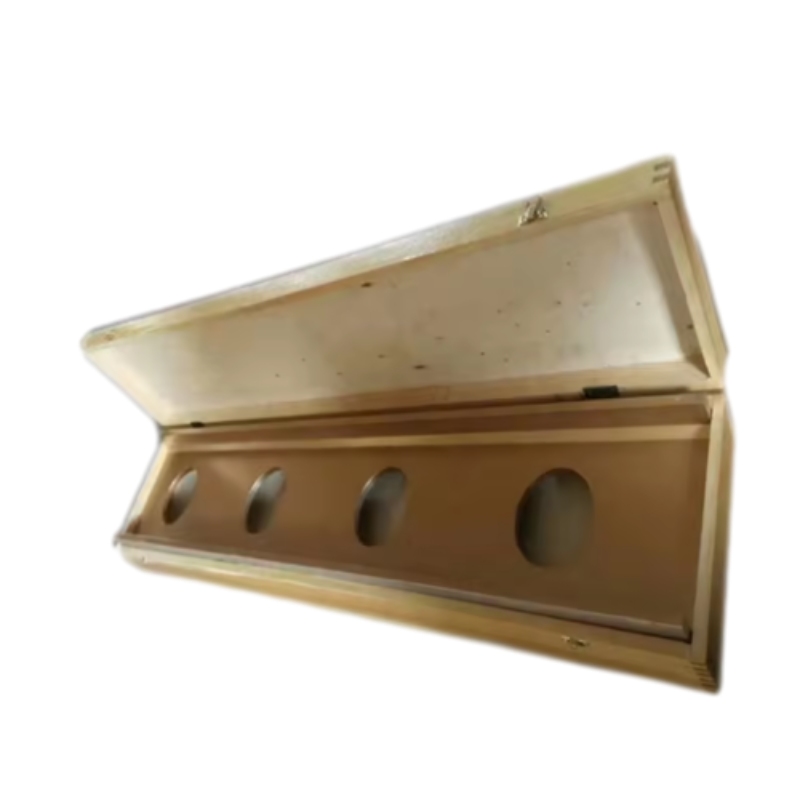
Vendor Comparison (quick glance)
| Vendor | Certifications | Lead Time | MOQ | Customization | Price Band |
|---|---|---|---|---|---|
| STR Machinery | ISO 9001; test report per DIN 874 | 7–20 days | 1 pc | Length, grade, logo, handles | Mid |
| Vendor A | ISO 9001 | 20–30 days | 5 pcs | Limited | Low–Mid |
| Vendor B | ISO 9001; CE (general) | 10–25 days | 2 pcs | Moderate | Mid–High |

Customization, Feedback, and Two Quick Case Notes
- Custom: lengths, hole patterns for clamps, magnetic backs, knurled grips, laser-etched scales, corrosion-proof coatings.
- Customer feedback: light alloy versions reduce fatigue during overhead checks; cast versions hold calibration longer on hot press lines.
- Case 1 (Automotive press shop): swapped to Mg-Al 1500 mm for weekly leveling; confirmation with cast iron 1000 mm. Downtime cut ≈ 18% after 3 months.
- Case 2 (Shipyard frames): 2000 mm cast steel rulers, grade 1, verified quarterly; fewer reworks according to QA logs. I guess discipline pays off.
Compliance and test data: per DIN 874 (straightedges grades 00–2) and DIN 876 for granite reference; ISO 9001:2015 quality system; material properties referenced against Mg-Al 6061-T6 databases. Always request the traceable calibration report for your parallel rulers for sale.
Authoritative citations
-
Ball Check Valve Questions About Connection, Parts and MaintenanceNewsNov.02,2026
-
Butterfly Valve Wholesale FAQ: Types, Specifications & Selection QuestionsNewsOct.28,2026
-
Choosing Guide Rail: Application Fit and Specification ChecksNewsOct.23,2026
-
Choosing a Measuring Micrometer: Application Fit and Specification ChecksNewsOct.23,2026
-
Choosing a Level Ruler: Application Fit and Specification ChecksNewsOct.23,2026
-
Choosing a Ring Gauge: Application Fit and Specification ChecksNewsOct.23,2026
 Afrikaans
 Albanian
 Amharic
 Arabic
 Armenian
 Azerbaijani
 Basque
 Belarusian
 Bengali
 Bosnian
 Bulgarian
 Catalan
 Cebuano
 Corsican
 Croatian
 Czech
 Danish
 Dutch
 Esperanto
 Estonian
 Finnish
 French
 Frisian
 Galician
 Georgian
 German
 Greek
 Gujarati
 Haitian Creole
 Hausa
 Hawaiian
 Hebrew
 Hindi
 Miao
 Hungarian
 Icelandic
 Igbo
 Indonesian
 Irish
 Italian
 Japanese
 Javanese
 Kannada
 Kazakh
 Khmer
 Rwandese
 Korean
 Kurdish
 Kyrgyz
 Lao
 Latin
 Latvian
 Lithuanian
 Luxembourgish
 Macedonian
 Malgashi
 Malay
 Malayalam
 Maltese
 Maori
 Marathi
 Mongolian
 Myanmar
 Nepali
 Norwegian
 Norwegian
 Occitan
 Pashto
 Persian
 Polish
 Portuguese
 Punjabi
 Romanian
 Russian
 Samoan
 Scottish Gaelic
 Serbian
 Sesotho
 Shona
 Sindhi
 Sinhala
 Slovak
 Slovenian
 Somali
 Spanish
 Sundanese
 Swahili
 Swedish
 Tagalog
 Tajik
 Tamil
 Tatar
 Telugu
 Thai
 Turkish
 Turkmen
 Ukrainian
 Urdu
 Uighur
 Uzbek
 Vietnamese
 Welsh
 Bantu
 Yiddish
 Yoruba
 Zulu
 English