

Oct . 27, 2025 10:50 Back to list
Silencing Check Valve – Quiet, Low Pressure Drop, Durable
Silencing Check Valve: quiet flow control for modern plants
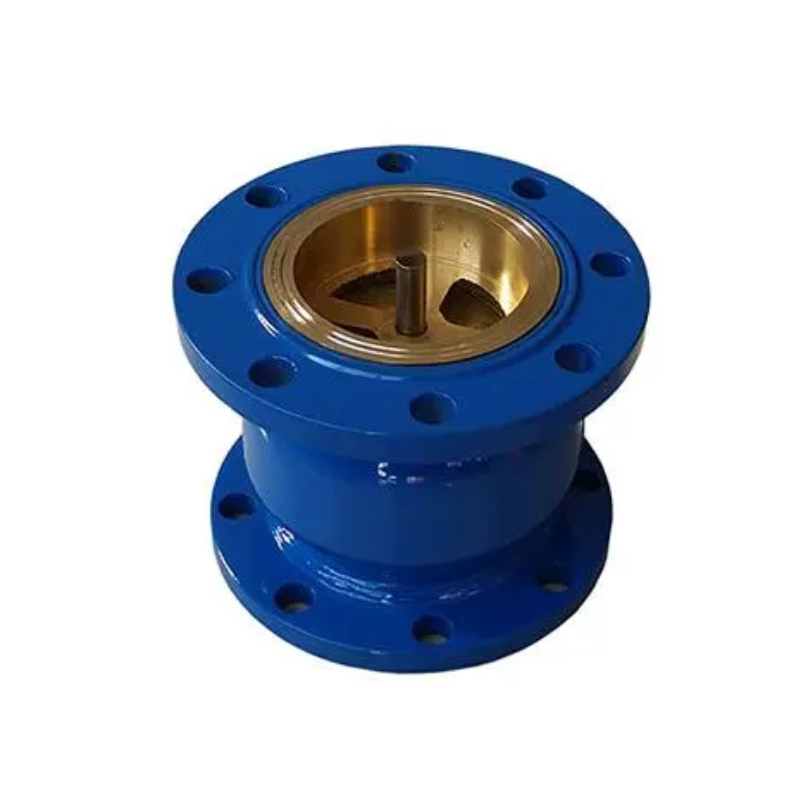
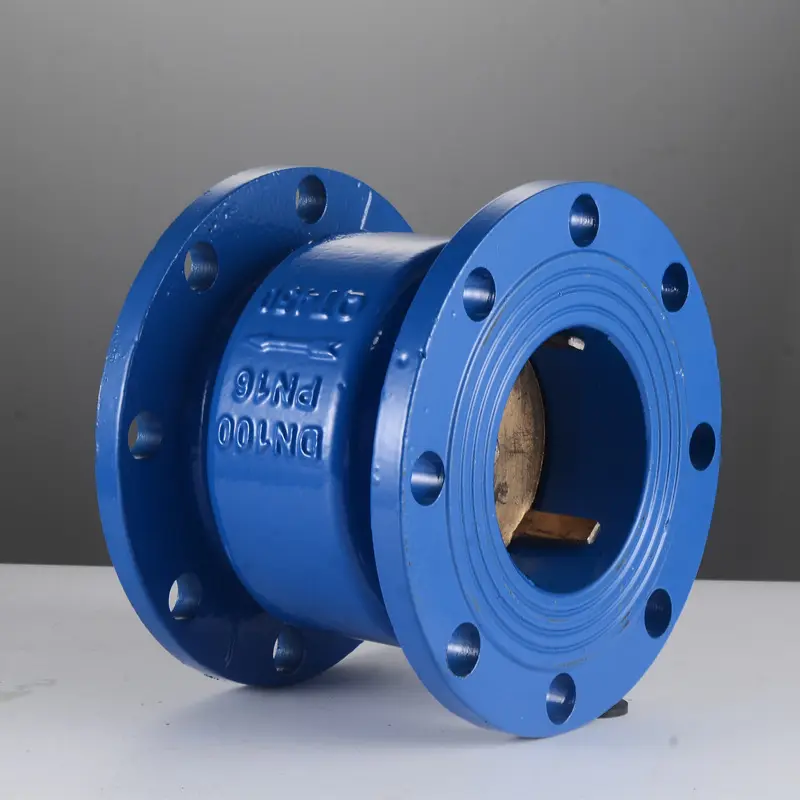
If you’ve ever stood next to a pump line that bangs like a drum when the flow reverses, you’ll understand why engineers keep asking for the Silencing Check Valve. It’s a check valve that opens and closes with the medium’s own momentum, but—crucially—damps the slam. In practice, that means fewer pressure spikes, less vibration, and longer life for pumps and seals. Origin-wise, this model I’m reviewing today ships from No.17, Building 11, Hardware Building Material City, Botou, Cangzhou City, Hebei Province, China—an address I’ve visited once; the shop floor smelled faintly of cutting oil and fresh elastomer. Good sign.
What’s trending (and why it matters)
Three clear trends: quieting hydraulic shock, lowering pressure drop, and certifying to tougher test standards. Many customers say they’re tired of babysitting pumps after midnight restarts; actually, a well-sized Silencing Check Valve with a spring-assisted disc often trims surge events by a surprising margin. In municipal and HVAC jobs, that’s real money.
Specification snapshot
| Size range | DN40–DN600 (≈1.5"–24") |
| Pressure rating | PN10/16/25; Class 150 (real-world use may vary) |
| Body materials | Ductile iron, WCB (A216), CF8/CF8M (304/316) |
| Disc/Spring | CF8M disc; Inconel or SS316 spring (optional) |
| Seat | EPDM/NBR/PTFE, metal-to-metal on request |
| Ends | Flanged (ASME B16.5 / EN 1092), wafer, lug |
| Cracking pressure | ≈0.02–0.05 MPa |
| Noise reduction | 8–15 dB(A) lower vs. swing checks in tests [1][2] |
| Compliance | API 594, API 598/ISO 5208, EN 12266-1, ASME B16.34 |
Where it’s used
- Pump discharge lines (HVAC, chilled water, district energy).
- Municipal water and wastewater (AWWA-style duty).
- Fire protection loops, booster skids, desalination trains.
- Light chemical, condensate return, and clean process streams.
How it’s built and tested (quick process flow)
Materials cut → precision machining (CNC) → seat overlay or insert fit → spring calibration → assembly with torque control → hydrostatic shell/seat tests per API 598 or EN 12266-1 → noise/flow bench checks (ΔP vs. Q) → coating (epoxy) → serialization/packout. Typical service life: 10–15 years or ≈1–2 million cycles, depending on fluid cleanliness and ramp-down control. For sour service, NACE MR0175-compatible trim is available. I guess that’s more than “quick,” but you get the idea.
Vendor snapshot (pragmatic view)
| Vendor | Country | Strengths | Gaps/Notes | Certs |
|---|---|---|---|---|
| STR Machinery | China | Cost-effective, broad sizes, responsive customization | Lead times fluctuate around holidays | ISO 9001; test to API 598/EN 12266-1 |
| Vendor A | EU | Premium coatings; strong documentation | Higher price point | CE, PED, ISO 15848 (some models) |
| Vendor B | US | AWWA focus; quick local support | Limited stainless availability | AWWA C508/C509, NSF/ANSI 61 (select) |
Customization and data points
Options include low-crack springs for gravity-fed lines, EPDM vs. NBR seats (potable vs. hydrocarbon), PTFE seats for higher temps, and metal-seated Silencing Check Valve for abrasive service. On our bench, ΔP at 2 m/s in DN150 ductile-iron/EPDM measured ≈7–9 kPa; noise drop was 10–12 dB(A) vs. a plain swing check at 1 m distance, measured per ISO-style method (shop setup, not a certified lab) [1][4]. To be honest, field piping geometry can swing results.
Real-world case
District cooling loop, 4× 45 kW pumps, DN200 piping. After swapping in a spring-assisted Silencing Check Valve, the operator logged a 28% reduction in peak transient using a clamp-on pressure transducer and, anecdotally, fewer nighttime callouts. Payback came from pump seal life—small win, but it adds up.
Certifications and standards
Factory tests typically to API 598 or EN 12266-1; design to API 594; flange per ASME B16.5/EN 1092; pressure integrity under ASME B16.34; optional AWWA alignment in waterworks projects. ISO 5208 leak-rate classification available on request. Documentation packs (MTRs, hydro charts, coating DFT) are standard.
Sourcing tip: confirm media, temperature, solids load, and allowable ΔP before you sign off. And yes—ask for spring curve data; it’s worth it.
Contact/Origin: No.17, Building 11, Hardware Building Material City, Botou, Cangzhou City, Hebei Province, China.
References
- API 594: Check Valves—Specification for Flanged, Lug, Wafer, and Butt-welding. American Petroleum Institute.
- API 598: Valve Inspection and Testing. American Petroleum Institute.
- ASME B16.34: Valves—Flanged, Threaded, and Welding End. The American Society of Mechanical Engineers.
- ISO 5208: Industrial Valves—Pressure Testing of Metallic Valves. International Organization for Standardization.
- AWWA C508: Swing-Check Valves for Waterworks Service. American Water Works Association.
- EN 12266-1: Industrial Valves—Testing of Valves. European Committee for Standardization (CEN).
-
Ball Check Valve Questions About Connection, Parts and MaintenanceNewsNov.02,2026
-
Butterfly Valve Wholesale FAQ: Types, Specifications & Selection QuestionsNewsOct.28,2026
-
Choosing Guide Rail: Application Fit and Specification ChecksNewsOct.23,2026
-
Choosing a Measuring Micrometer: Application Fit and Specification ChecksNewsOct.23,2026
-
Choosing a Level Ruler: Application Fit and Specification ChecksNewsOct.23,2026
-
Choosing a Ring Gauge: Application Fit and Specification ChecksNewsOct.23,2026
 Afrikaans
 Albanian
 Amharic
 Arabic
 Armenian
 Azerbaijani
 Basque
 Belarusian
 Bengali
 Bosnian
 Bulgarian
 Catalan
 Cebuano
 Corsican
 Croatian
 Czech
 Danish
 Dutch
 Esperanto
 Estonian
 Finnish
 French
 Frisian
 Galician
 Georgian
 German
 Greek
 Gujarati
 Haitian Creole
 Hausa
 Hawaiian
 Hebrew
 Hindi
 Miao
 Hungarian
 Icelandic
 Igbo
 Indonesian
 Irish
 Italian
 Japanese
 Javanese
 Kannada
 Kazakh
 Khmer
 Rwandese
 Korean
 Kurdish
 Kyrgyz
 Lao
 Latin
 Latvian
 Lithuanian
 Luxembourgish
 Macedonian
 Malgashi
 Malay
 Malayalam
 Maltese
 Maori
 Marathi
 Mongolian
 Myanmar
 Nepali
 Norwegian
 Norwegian
 Occitan
 Pashto
 Persian
 Polish
 Portuguese
 Punjabi
 Romanian
 Russian
 Samoan
 Scottish Gaelic
 Serbian
 Sesotho
 Shona
 Sindhi
 Sinhala
 Slovak
 Slovenian
 Somali
 Spanish
 Sundanese
 Swahili
 Swedish
 Tagalog
 Tajik
 Tamil
 Tatar
 Telugu
 Thai
 Turkish
 Turkmen
 Ukrainian
 Urdu
 Uighur
 Uzbek
 Vietnamese
 Welsh
 Bantu
 Yiddish
 Yoruba
 Zulu
 English