

Oct . 14, 2025 08:35 Back to list
Ball Valve Body Types: Stainless, Carbon, Brass Options
A field guide to ball valve body types (with a candid look at ball check valves)
If you’ve ever popped the bonnet on a stubborn line and wondered why one valve keeps humming along while another seizes, it often comes down to body construction. I’ve toured plants from refineries to municipal pump rooms, and, to be honest, the quiet winners are usually the valves with the right body type for the job. That includes the humble ball check valve—under‑celebrated, but mighty practical.
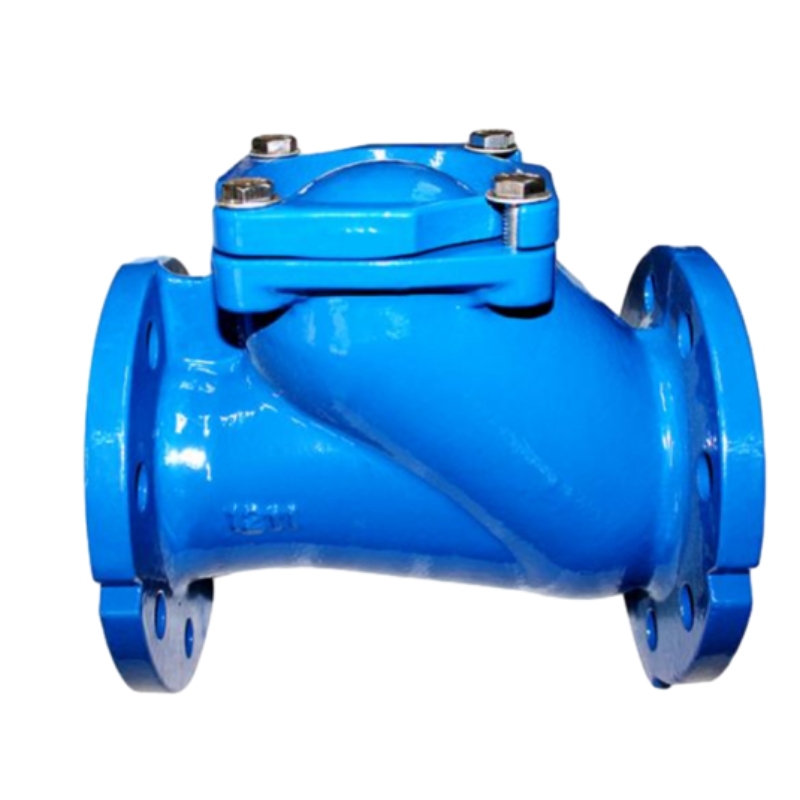
What do people mean by ball valve body types?
Quick refresher—common body constructions you’ll actually meet in the wild:
- One-piece cast: compact, economical, fewer leak paths; maintenance can be trickier.
- Two-piece split-body: easier internal access; popular in water and general service.
- Three-piece (clamped): fast inline maintenance; the plant‑technician favorite.
- Top-entry: service from above; handy under tight pipe racks.
- Fully welded: zero external leakage paths; pipeline and buried service.
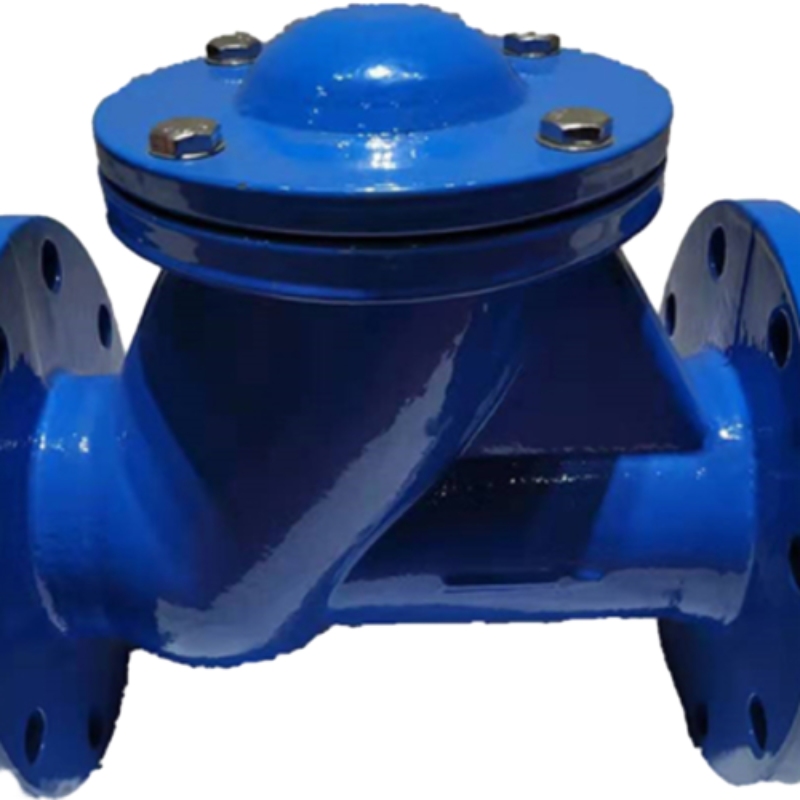
Ball check valves borrow the same logic. The body may be one-piece or split, but instead of a rotating ball with a bore, the ball is free-moving and seals against a cone—or seat—under backflow. That simplicity is why many customers say they’re quieter than swing checks and less fussy than spring checks, especially with slurries.
Featured product: Ball Check Valve (STR Machinery)
Origin: No.17, Building 11, Hardware Building Material City, Botou, Cangzhou City, Hebei Province, China. I visited the Hebei cluster years ago; there’s a deep bench of casting talent there, and it shows.
| Spec | Typical Range (≈ / real-world use may vary) |
|---|---|
| Sizes | DN25–DN300 (1"–12") |
| Pressure Class | PN10–PN16, ANSI 150 |
| Body Materials | WCB, Ductile Iron, CF8/CF8M; epoxy coating optional |
| Ball/Seat | Rubber ball (NBR/EPDM/FKM); cone body in metal or polymer |
| Ends | Flanged (EN 1092-1 / ASME B16.5), wafer, threaded (NPT/BSPT) |
| Temp | ≈ −20 to 120 °C (elastomer dependent) |
| Testing | Hydrostatic shell 1.5× rated; seat 1.1×; ISO 5208 Rate A / EN 12266-1 |
| Service Life | Up to 10–15 years in clean water; abrasive slurries reduce life |
Process flow (how it’s made—briefly)
- Material selection: WCB or ductile iron for economy; CF8M for corrosion. Elastomer picked to suit media (EPDM for water, FKM for hydrocarbons).
- Casting: sand or investment casting; heat treatment to stabilize grain.
- Machining: CNC facing, bore tolerance checks, Ra ≤ 3.2 μm typical sealing surfaces.
- Coating: fusion‑bonded epoxy or paint; DFT ≈ 250 μm for waterworks.
- Assembly: ball-cone fit, dimensional inspection, torque/weight checks.
- Testing: hydrostatic shell/seat per ISO 5208 or EN 12266-1; optional helium sniff for critical service.
- Docs: MTC EN 10204 3.1, serial tagging, traceability.
Where they shine
Water and wastewater lift stations, mining slurry lines (with abrasion‑resistant balls), HVAC chilled water, food & beverage CIP return. Many operators tell me these close quietly—less water hammer than disc‑style checks. Install vertically (flow up) for gravity assist; horizontal works too if sized right.
Vendor snapshot (body types, standards, and pragmatics)
| Vendor | Body Types Supported | Certs/Standards | Lead Time | Notes |
|---|---|---|---|---|
| STR Machinery (Hebei) | One-piece, two-piece split; flanged/wafer/threaded checks | ISO 5208, EN 12266-1; material per ASME B16.34; NACE on request | ≈ 3–6 weeks | Good value; customization friendly |
| Global Brand A | Three-piece, top-entry, fully welded (broader range) | API 6D, ISO 9001, PED | 6–12 weeks | Premium pricing; deep documentation |
| Local OEM | Two-piece, three-piece (limited sizes) | EN 10204 3.1; shop test per ISO 5208 | 1–4 weeks | Fast spares; specs vary by batch |
Mini case study
A coastal wastewater plant swapped aging swing checks for DN150 two-piece ball checks. Result: measured slam noise down ≈40%, pump runback events cut to near zero, and maintenance dropped to “30 minutes, gasket only”—their words, not mine. Media had grit; EPDM balls were replaced after ~4 years, which is perfectly respectable in that duty.
Customization checklist
- Elastomers: EPDM (potable), NBR (oils), FKM (chemicals).
- Coatings: FBE, epoxy; drinking water approvals may apply.
- Ends/Drilling: ASME B16.5 Class 150, EN 1092-1 PN16, NPT/BSPT.
- Documentation: hydro test charts, PMI, EN 10204 3.1; API/ISO formats on request.
Standards frequently referenced: API 6D for pipeline valves, ASME B16.34 for materials/ratings, ISO 5208 and EN 12266-1 for pressure testing, and NACE MR0175/ISO 15156 when sour service rears its head.
Authoritative citations
-
Ball Check Valve Questions About Connection, Parts and MaintenanceNewsNov.02,2026
-
Butterfly Valve Wholesale FAQ: Types, Specifications & Selection QuestionsNewsOct.28,2026
-
Choosing Guide Rail: Application Fit and Specification ChecksNewsOct.23,2026
-
Choosing a Measuring Micrometer: Application Fit and Specification ChecksNewsOct.23,2026
-
Choosing a Level Ruler: Application Fit and Specification ChecksNewsOct.23,2026
-
Choosing a Ring Gauge: Application Fit and Specification ChecksNewsOct.23,2026
 Afrikaans
 Albanian
 Amharic
 Arabic
 Armenian
 Azerbaijani
 Basque
 Belarusian
 Bengali
 Bosnian
 Bulgarian
 Catalan
 Cebuano
 Corsican
 Croatian
 Czech
 Danish
 Dutch
 Esperanto
 Estonian
 Finnish
 French
 Frisian
 Galician
 Georgian
 German
 Greek
 Gujarati
 Haitian Creole
 Hausa
 Hawaiian
 Hebrew
 Hindi
 Miao
 Hungarian
 Icelandic
 Igbo
 Indonesian
 Irish
 Italian
 Japanese
 Javanese
 Kannada
 Kazakh
 Khmer
 Rwandese
 Korean
 Kurdish
 Kyrgyz
 Lao
 Latin
 Latvian
 Lithuanian
 Luxembourgish
 Macedonian
 Malgashi
 Malay
 Malayalam
 Maltese
 Maori
 Marathi
 Mongolian
 Myanmar
 Nepali
 Norwegian
 Norwegian
 Occitan
 Pashto
 Persian
 Polish
 Portuguese
 Punjabi
 Romanian
 Russian
 Samoan
 Scottish Gaelic
 Serbian
 Sesotho
 Shona
 Sindhi
 Sinhala
 Slovak
 Slovenian
 Somali
 Spanish
 Sundanese
 Swahili
 Swedish
 Tagalog
 Tajik
 Tamil
 Tatar
 Telugu
 Thai
 Turkish
 Turkmen
 Ukrainian
 Urdu
 Uighur
 Uzbek
 Vietnamese
 Welsh
 Bantu
 Yiddish
 Yoruba
 Zulu
 English