

Sep . 10, 2025 08:20 Back to list
Durable Granite Box: Elegant Stone Storage & Decor Solutions
Precision Engineering: Understanding the Granite Box
In high-precision manufacturing and metrology, the demand for stable, accurate, and durable reference surfaces and machine bases is paramount. This is where the granite box emerges as an indispensable component. Crafted from naturally occurring igneous rock, these precision components offer unparalleled dimensional stability, vibration damping, and resistance to environmental factors, making them critical for applications demanding micron-level accuracy. Unlike traditional metal structures, granite's unique material properties – including low thermal expansion, high hardness, and non-magnetic characteristics – contribute significantly to the long-term integrity and performance of sophisticated industrial equipment.
The application spectrum for these precision elements spans across various high-tech sectors, from advanced semiconductor manufacturing to optical alignment systems, and from coordinate measuring machines (CMMs) to laser processing platforms. As industries push the boundaries of miniaturization and precision, the fundamental stability provided by a well-engineered granite box becomes a cornerstone for achieving desired operational tolerances and ensuring product quality. This document delves into the technical aspects, manufacturing processes, application scenarios, and strategic advantages that position granite components at the forefront of modern industrial precision.
Industry Trends and Market Dynamics
The market for precision granite components, including the granite box and block of granite, is experiencing steady growth driven by several key industry trends. The burgeoning demand for higher accuracy in manufacturing, especially in sectors like aerospace, automotive (electric vehicles), medical devices, and semiconductor production, is a primary catalyst. There's a noticeable shift towards integrating granite solutions into automated systems and robotic cells, where their inherent stability complements the speed and repeatability of automation. Miniaturization in electronics and optics necessitates increasingly precise manufacturing environments, often built upon granite foundations.
Furthermore, the drive for enhanced sustainability and energy efficiency in industrial operations subtly benefits granite. Unlike metal components that may require complex machining and thermal treatments, granite processing, while energy-intensive in cutting, results in a final product with exceptional longevity, reducing the need for frequent replacement and remanufacturing. The global supply chain resilience post-2020 has also highlighted the value of diverse material sourcing, prompting some manufacturers to explore alternatives to conventional materials. The segment for custom, large-scale granite components, such as a large marble box, for specialized machinery is also expanding, reflecting the unique demands of cutting-edge research and development.
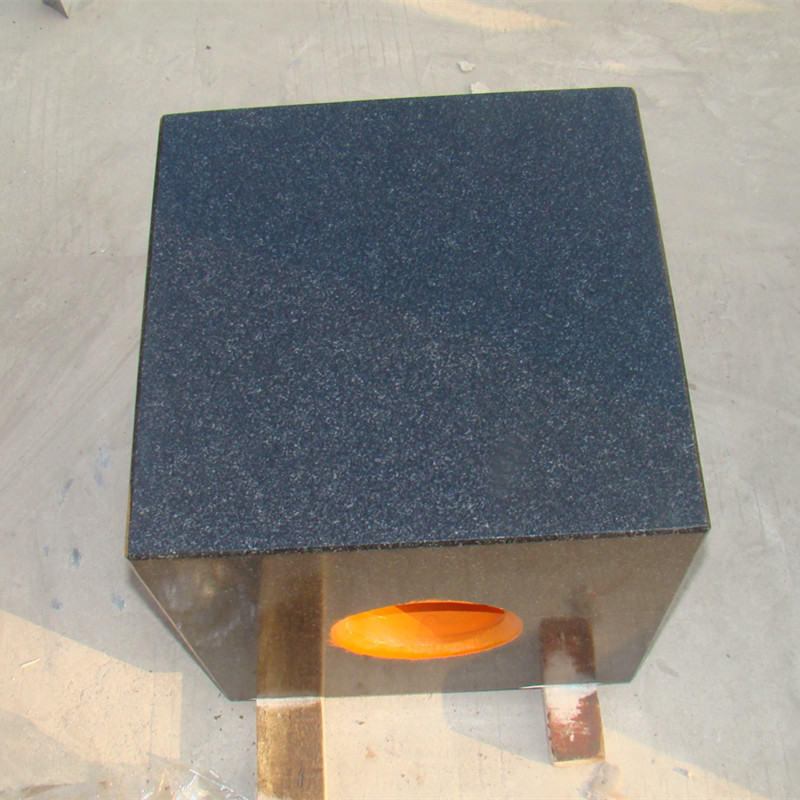
Detailed Manufacturing Process Flow of a Granite Box
The creation of a precision granite box involves a meticulous, multi-stage process designed to harness the natural properties of the stone while achieving micron-level accuracy. The primary material is typically black granite, such as Jinan Black or Impala Black, chosen for its dense, uniform structure, minimal porosity, and superior hardness (Mohs hardness scale 6-7). This material selection is crucial for the component's long-term stability and resistance to wear.
Manufacturing Steps:
- Raw Material Selection and Quarrying: Large, high-quality blocks of granite are extracted from quarries. Careful inspection ensures the absence of significant cracks, inclusions, or geological faults that could compromise structural integrity. This stage directly impacts the homogeneity and performance of the final product.
- Rough Sawing and Cutting: The raw block of granite is cut into approximate dimensions using large diamond-tipped saws. Waterjet cutting can also be employed for intricate initial shapes, minimizing stress on the material. This rough shaping is often an iterative process to reduce material waste.
- Stress Relief and Aging: The cut granite pieces undergo natural or artificial aging processes. Natural aging involves leaving the granite exposed to ambient conditions for several months to years, allowing internal stresses from quarrying and cutting to dissipate. Artificial aging (thermal cycling) can accelerate this, stabilizing the material and preventing future deformation. This is critical for dimensional stability.
- Preliminary Grinding: The aged granite blocks are then coarsely ground using diamond abrasives to achieve closer tolerances and to remove major surface irregularities. This prepares the surface for subsequent precision work.
- Precision Lapping and Polishing (CNC Machining): This is the most critical stage. High-precision CNC grinding and lapping machines, equipped with fine diamond slurries, are used to achieve the specified flatness, parallelism, and perpendicularity. Iterative grinding and hand-lapping with progressively finer grits are performed until the required surface finish and geometric accuracy are met. This process is typically performed in a temperature-controlled environment to minimize thermal expansion effects.
- Hole Drilling and Threading: If the granite box requires mounting holes or threaded inserts, these are precisely drilled using diamond core drills and then, if necessary, fitted with metal inserts (typically brass or stainless steel) using specialized epoxy resins. This is done with extreme care to prevent chipping or cracking.
- Cleaning and Final Inspection: The finished component is thoroughly cleaned to remove all abrasive residues. A comprehensive final inspection is then conducted using advanced metrology equipment, such as autocollimators, electronic levels, and coordinate measuring machines (CMMs), to verify adherence to standards like ISO 1101 (Geometric Product Specifications), ANSI B89.3.7-2013 (Granite Surface Plates), or other client-specific standards. Surface finish is often verified with profilometers.
- Certification and Packaging: Each square marble box (or granite equivalent) is accompanied by a calibration certificate. It is then carefully packaged, often in custom-built wooden crates with foam inserts, to protect its precision surfaces during transit.
The typical service life of a well-maintained granite component can exceed 20 years, largely due to its inherent material stability and resistance to corrosion or fatigue, unlike metal counterparts. Target industries include precision optics, semiconductor lithography, aerospace tooling, medical device manufacturing, and high-end machine tool construction where sub-micron precision is non-negotiable. In these scenarios, the inherent advantages of granite, such as its energy-saving passive stability (no need for active thermal compensation) and chemical inertness, are profoundly beneficial.
Technical Specifications and Parameters
The performance of a granite box is defined by a set of critical technical specifications, which dictate its suitability for particular precision applications. These parameters are meticulously controlled during manufacturing and verified through rigorous testing. Understanding these specifications is essential for engineers and procurement specialists.
Typical Specifications for Precision Granite Box:
| Parameter | Typical Range/Value | Significance |
|---|---|---|
| Material | Black Granite (e.g., Jinan Black) | High density, low porosity, stable |
| Density | 2.97 - 3.07 g/cm³ | Excellent vibration damping, high stiffness |
| Hardness (Shore) | > 70 HS | High wear resistance, long service life |
| Thermal Expansion Coefficient | (4-6) x 10⁻⁶ /°C | Superior thermal stability, minimal dimensional change with temperature fluctuations |
| Elastic Modulus (Young's Modulus) | 70 - 100 GPa | High rigidity, minimal deflection under load |
| Water Absorption | < 0.15% | Maintains dimensional stability, prevents rust |
| Flatness Tolerance | Grade 00 (0.0015mm for 1000x1000mm) per DIN 876 or equivalent | Ultra-high precision for metrology applications |
| Perpendicularity Tolerance | Typically < 0.003mm per 1000mm | Ensures accurate orthogonal machine movements |
| Parallelism Tolerance | Typically < 0.002mm per 1000mm | Crucial for consistent measurement planes |
These parameters collectively ensure that a marble stone box (or granite equivalent) functions as a highly stable and precise reference for advanced industrial and scientific applications. The precision achieved is regularly verified against international standards such as ISO 8512-1:1990 for machine tools, ensuring global interoperability and reliability.
Application Scenarios and Technical Advantages
The unique properties of granite make the granite box an ideal choice across a multitude of high-precision application scenarios, offering distinct technical advantages over traditional materials.
Typical Application Scenarios:
- Coordinate Measuring Machines (CMMs): As a base for CMMs, granite provides an unyielding, flat reference plane essential for accurate three-dimensional measurements. Its vibration damping capabilities minimize external interference, ensuring stable readings.
- Precision Machine Tools: Used as machine beds or frames for CNC machining centers, grinding machines, and laser cutting systems. The high rigidity and thermal stability of a block of granite maintain geometric accuracy during operation, crucial for intricate part manufacturing.
- Semiconductor Manufacturing: In wafer inspection, lithography, and packaging equipment, granite stages and bases provide the necessary vibration isolation and thermal stability for sub-nanometer positioning accuracy.
- Optical and Laser Systems: For optical benches, interferometers, and laser alignment setups, granite's excellent damping and low thermal expansion prevent optical path distortions and ensure consistent beam stability.
- Aerospace and Defense: Used in specialized fixtures, gauges, and assembly jigs where extreme precision and long-term stability are paramount for critical component fabrication and inspection.
Technical Advantages:
- Exceptional Dimensional Stability: Granite exhibits a very low coefficient of thermal expansion (CTE) compared to metals, minimizing dimensional changes due to temperature fluctuations. This is crucial for maintaining precision in varying ambient conditions.
- Superior Vibration Damping: The dense, granular structure of granite provides excellent natural damping characteristics, absorbing mechanical vibrations effectively. This is vital in environments where external vibrations could compromise measurement or machining accuracy.
- High Hardness and Wear Resistance: Granite's hardness ensures that its precision-lapped surfaces resist wear and abrasion, prolonging the life of the component and maintaining its accuracy over decades, even in continuous use.
- Non-Corrosive and Non-Magnetic: Unlike cast iron or steel, granite is immune to rust and is completely non-magnetic. This makes it ideal for applications in humid environments, cleanrooms, or alongside sensitive electronic and magnetic field equipment.
- Lower Maintenance: Granite surfaces do not burr or deform under impact like metal. Minor damage does not propagate, and the material requires only simple cleaning to maintain its functionality.
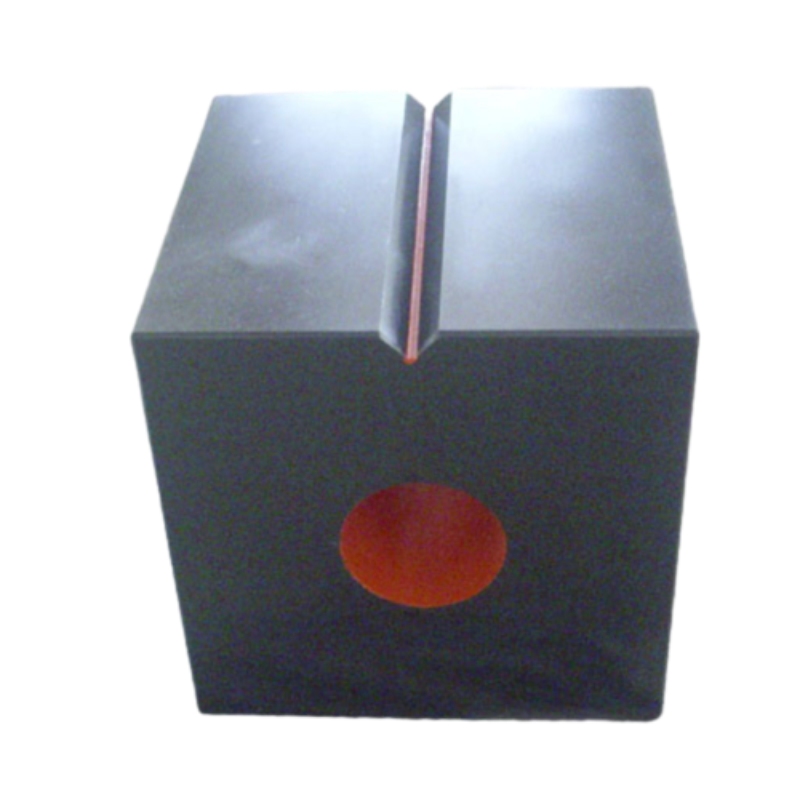
These inherent advantages translate into higher operational efficiency, reduced calibration cycles, and ultimately, enhanced product quality for industries relying on extreme precision. The stability of a large marble box (or granite block) provides a silent yet powerful foundation for advanced technological endeavors.
Vendor Comparison and Customized Solutions
When sourcing a precision granite box or other granite components, selecting the right vendor is paramount. Key differentiators include material quality, manufacturing precision (e.g., ability to achieve Grade 00 or 000 flatness), customization capabilities, certification adherence (ISO 9001, specific metrology standards), and post-sales support.
Granite vs. Other Materials for Precision Bases:
| Feature | Granite | Cast Iron / Steel | Ceramic |
|---|---|---|---|
| Thermal Expansion | Very Low (Excellent) | Moderate (Good, but requires temp control) | Extremely Low (Superior) |
| Vibration Damping | High (Excellent) | Moderate (Fair, often needs external dampers) | Low (Poor, highly resonant) |
| Hardness / Wear Resistance | High (Excellent, no burring) | Moderate (Can burr, requires more maintenance) | Very High (Excellent, but brittle) |
| Corrosion Resistance | Excellent (Non-corrosive) | Poor (Rusts, requires protective coatings) | Excellent (Non-corrosive) |
| Magnetism | Non-magnetic (Excellent) | Magnetic (Poor for sensitive electronics) | Non-magnetic (Excellent) |
| Cost Effectiveness | Moderate to High (Excellent ROI for precision) | Low to Moderate (Good for general industrial) | Very High (Specialized applications) |
This comparison highlights why granite remains a top choice for applications where vibration control and thermal stability are critical, often outweighing the initial material cost due to superior long-term performance and reduced downtime.
Customized Solutions:
Beyond standard offerings, many applications require custom-designed granite box solutions. This can include specific dimensions, configurations (e.g., L-shaped, T-shaped), integration of pneumatic or vacuum channels, pre-drilled and threaded holes, or specialized inserts for sensors and actuators. Our engineering team collaborates closely with clients from concept to delivery, leveraging CAD/CAM technologies to translate complex requirements into precise granite components. This ensures optimal functionality and seamless integration into existing or new machine designs. For instance, a custom square marble box could be designed with integrated air bearing surfaces for ultra-smooth motion in advanced research setups.
Application Case Studies and Customer Feedback
The real-world performance of a granite box is best demonstrated through successful application case studies and direct customer feedback. These examples highlight the tangible benefits of choosing precision granite for critical industrial operations.
Case Study 1: Enhanced Accuracy in Medical Device Manufacturing
A leading manufacturer of precision surgical instruments faced challenges with geometric deviations during a critical micro-machining process. Their existing steel machine base suffered from thermal expansion effects and residual vibrations, leading to inconsistent product quality. By replacing the steel base with a custom-engineered granite box, specifically designed for their multi-axis machining center, they observed a significant improvement. The granite's inherent thermal stability reduced positional errors by 40% (from 5 microns to 3 microns), and its superior vibration damping led to a 25% improvement in surface finish. This upgrade enabled them to meet stringent regulatory requirements (e.g., FDA standards for device precision) and reduced scrap rates, ultimately enhancing patient safety and manufacturing throughput.
Case Study 2: Stability for Advanced Optical Metrology
An R&D institute developing next-generation astronomical instrumentation required an ultra-stable platform for their experimental optical interferometer. They chose a large custom granite box, measuring 2.5m x 1.5m x 0.5m, as the core of their optical bench. The non-magnetic property of granite was crucial to avoid interference with sensitive magnetic sensors, and its exceptional vibration damping ensured that environmental disturbances did not compromise the nanometer-level precision required for interferometric measurements. Over three years of operation, the granite platform demonstrated consistent sub-micron stability, allowing the researchers to achieve breakthrough results in their astronomical observations and optical component testing.
Customer Feedback:
"We integrated STR Machinery's custom granite box into our new laser micromachining system. The difference in process stability compared to our previous metallic base is night and day. We've seen a measurable improvement in the consistency of our cut depths and edge quality, directly impacting our yield rates. Their adherence to ISO standards and the detailed calibration report provided immense confidence." - Dr. Chen, Lead Engineer, Advanced Materials Processing Inc.
"For our precision gauging applications, the square marble box (granite equivalent) provided by this vendor has proven exceptionally reliable. Its surface flatness tolerance is maintained even after years of heavy use, which is critical for maintaining our product quality control. The support team was also highly responsive during the initial setup." - Mr. Davies, Quality Assurance Manager, Global Metrology Solutions.
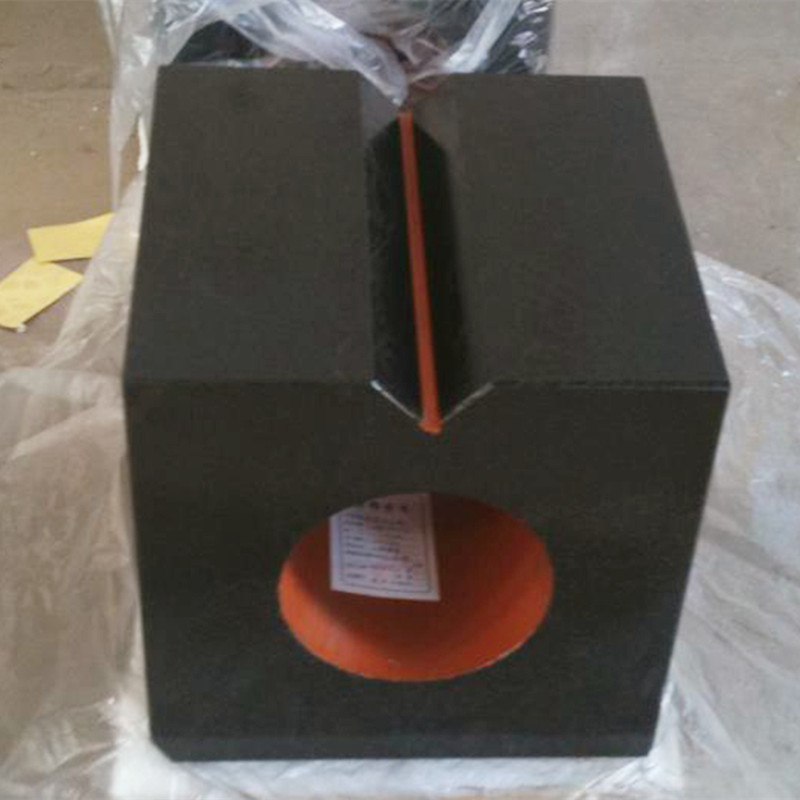
Trustworthiness and Support Information
Frequently Asked Questions (FAQ)
Q: What is the typical lead time for a custom granite box?
A: Standard sizes typically ship within 4-6 weeks. Custom dimensions or complex designs, especially for a large marble box, can range from 8-16 weeks, depending on the complexity of the design and specific finishing requirements. Expedited options may be available upon request.
Q: How do granite components maintain their precision over time?
A: Granite is an inherently stable material due to its crystalline structure and low thermal expansion coefficient. Our manufacturing process includes stress relief (aging) and meticulous lapping, which locks in the precision. Regular cleaning and avoidance of impact are generally sufficient for long-term maintenance.
Q: What kind of warranty is offered on granite products?
A: We offer a comprehensive 1-year warranty on all our precision granite components against manufacturing defects and material integrity issues. This warranty covers the accuracy specifications as detailed in the accompanying calibration certificate under normal operating conditions.
Q: Can you provide installation support or guidance?
A: While our products are designed for straightforward integration, we provide detailed installation guidelines and technical drawings. For complex projects or larger installations, our engineering team is available for remote consultation and, where necessary, on-site support to ensure optimal setup and performance.
Lead Time and Fulfillment
Our streamlined manufacturing processes and established supply chain enable competitive lead times. For standard `granite box` sizes and configurations, a typical lead time of 4-6 weeks is quoted from order confirmation to dispatch. For highly customized projects or large-scale orders, a detailed project timeline will be provided upon design finalization, generally ranging from 8 to 16 weeks. We maintain a robust logistics network to ensure secure and timely global delivery, utilizing specialized crating and transport methods to protect precision surfaces during transit.
Warranty Commitments
STR Machinery stands behind the quality and precision of every granite box we produce. All products are backed by a 1-year limited warranty covering material defects and adherence to specified geometric tolerances (e.g., flatness, perpendicularity) as detailed in the accompanying calibration certificate. This commitment underscores our confidence in our manufacturing excellence and the inherent durability of our granite components, ensuring peace of mind for our industrial clients.
Customer Support and After-Sales Service
Our commitment extends beyond delivery. We offer comprehensive after-sales support, including technical assistance for installation, maintenance advice, and recalibration services. Our dedicated support team is available to address any inquiries or operational challenges, ensuring the long-term reliability and performance of your block of granite precision components. For immediate assistance, please refer to the contact details provided on our website.
References
- ASTM C615 / C615M-18. (2018). Standard Specification for Granite Dimension Stone. ASTM International.
- ANSI B89.3.7-2013. (2013). Granite Surface Plates. American National Standards Institute.
- ISO 1101:2017. (2017). Geometrical product specifications (GPS) - Geometrical tolerancing - Tolerances of form, orientation, location and run-out. International Organization for Standardization.
- Bush, D. (2007). Precision granite applications in machine tool structures. SME Technical Paper, MR07-160.
- Goryachev, A. V., et al. (2019). Application of Natural Stone for Precision Instrument Bases. Journal of Engineering Physics and Thermophysics, 92(1), 163-169.
-
Ultimate Guide to Using a Professional Metre Spirit LevelNewsApr.16,2026
-
Ultimate Guide to Using and Choosing a Meter Spirit LevelNewsApr.09,2026
-
A Comprehensive Guide to Selecting the Ideal Meter Long Spirit Level for Accurate MeasurementsNewsApr.07,2026
-
Choosing the Perfect Metal Spirit Level for Accurate Measurements and ProjectsNewsApr.04,2026
-
Exploring the Diverse Levels of Spirits Quality and Production TechniquesNewsMar.31,2026
-
Understanding the Precision of a Level Spirit Level for Accurate MeasurementsNewsMar.28,2026
 Afrikaans
 Albanian
 Amharic
 Arabic
 Armenian
 Azerbaijani
 Basque
 Belarusian
 Bengali
 Bosnian
 Bulgarian
 Catalan
 Cebuano
 Corsican
 Croatian
 Czech
Czech
 Danish
 Dutch
Dutch
 Esperanto
 Estonian
 Finnish
 French
 Frisian
 Galician
 Georgian
 German
 Greek
Greek
 Gujarati
 Haitian Creole
 Hausa
Hausa
 Hawaiian
 Hebrew
 Hindi
Hindi
 Miao
Miao
 Hungarian
 Icelandic
 Igbo
Igbo
 Indonesian
 Irish
Irish
 Italian
 Japanese
 Javanese
 Kannada
 Kazakh
 Khmer
Khmer
 Rwandese
 Korean
 Kurdish
 Kyrgyz
 Lao
Lao
 Latin
Latin
 Latvian
 Lithuanian
 Luxembourgish
 Macedonian
 Malgashi
 Malay
Malay
 Malayalam
 Maltese
 Maori
Maori
 Marathi
 Mongolian
 Myanmar
 Nepali
 Norwegian
 Norwegian
 Occitan
 Pashto
 Persian
 Polish
 Portuguese
 Punjabi
 Romanian
 Russian
 Samoan
 Scottish Gaelic
 Serbian
 Sesotho
 Shona
Shona
 Sindhi
 Sinhala
 Slovak
 Slovenian
 Somali
 Spanish
 Sundanese
 Swahili
 Swedish
 Tagalog
 Tajik
Tajik
 Tamil
Tamil
 Tatar
Tatar
 Telugu
 Thai
Thai
 Turkish
 Turkmen
 Ukrainian
 Urdu
Urdu
 Uighur
 Uzbek
Uzbek
 Vietnamese
 Welsh
Welsh
 Bantu
Bantu
 Yiddish
 Yoruba
 Zulu
Zulu
 English