

Nov . 03, 2025 18:25 Back to list
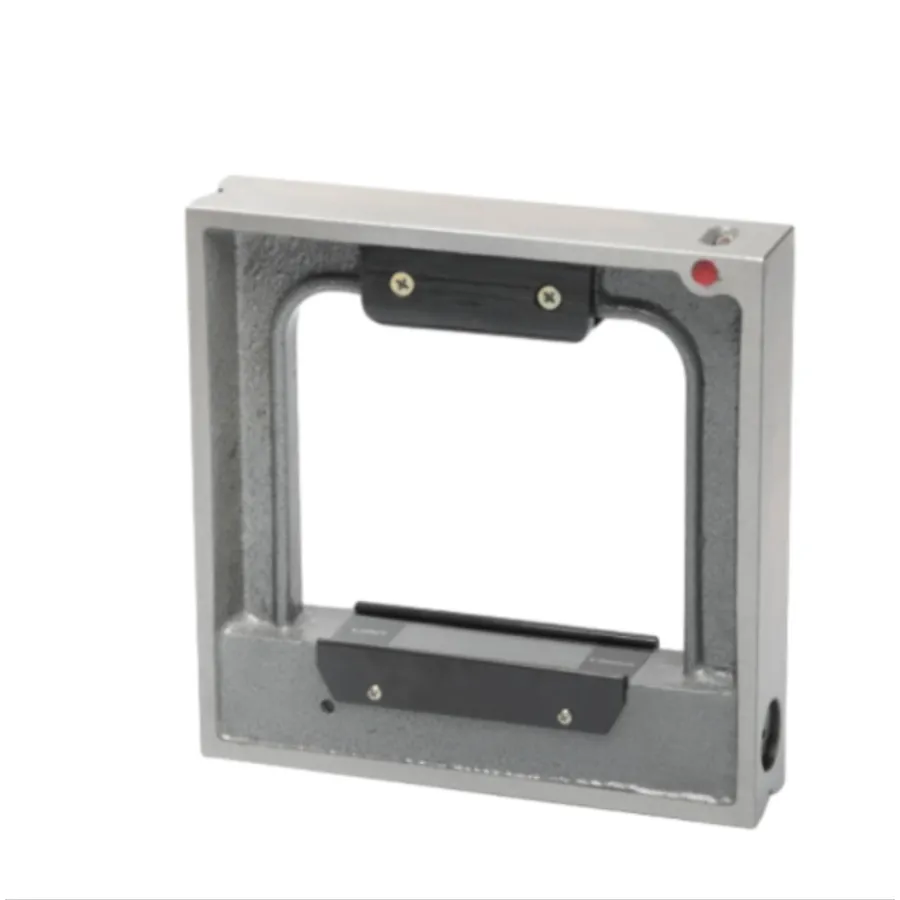
High-Precision Frame Level for Professional Alignment
The Indispensable Role of Frame Levels in Precision Engineering
In the intricate world of industrial manufacturing and heavy machinery installation, the precision of alignment is not merely a matter of convenience; it is a critical determinant of operational efficiency, product quality, and structural integrity. Central to achieving this unparalleled accuracy are frame level instruments. These sophisticated tools, often referred to as precision frame levels or frame spirit levels, are engineered to provide highly accurate measurements of inclination and flatness, far surpassing the capabilities of conventional spirit levels.
The demand for ever-higher precision across various industrial sectors has spurred significant advancements in metrology. Modern frame level instruments are designed not only for exceptional accuracy but also for durability and adaptability to diverse, often harsh, industrial environments. Industry trends highlight a shift towards tools that offer digital integration, enhanced data logging capabilities, and robust construction capable of withstanding the rigors of heavy industry. This evolution ensures that businesses can maintain stringent quality control, optimize machinery performance, and extend the service life of critical assets.
The importance of such precise leveling tools extends across foundational installations, machine calibration, and ongoing maintenance. Without the meticulous alignment ensured by high-quality frame levels, even minor inaccuracies can lead to accelerated wear and tear, increased energy consumption, vibrational issues, and ultimately, costly operational downtime. As industries push the boundaries of manufacturing tolerances, the role of a reliable and accurate precision frame level becomes increasingly paramount.
The Meticulous Manufacturing Process of Precision Frame Levels
The creation of a high-quality frame level is a testament to precision engineering and meticulous craftsmanship, involving a multi-stage process that ensures accuracy, durability, and reliability. This journey begins with the selection of premium materials and culminates in rigorous testing protocols.
1. Material Selection & Preparation:
The foundation of a robust frame level lies in its material. Typically, high-grade stabilized cast iron (e.g., GG25 or equivalent) or hardened tool steel is chosen for its exceptional dimensional stability, low thermal expansion coefficient, and resistance to wear. These materials undergo annealing processes to relieve internal stresses, preventing deformation over time and ensuring long-term accuracy. For specialized applications requiring enhanced corrosion resistance, stainless steel variants may be utilized, particularly in environments prevalent in the petrochemical or water supply & drainage industries.
2. Casting and Machining:
- Casting: For cast iron bodies, precise molds are used to form the initial "frame" structure, ensuring adequate mass for stability and critical flat or V-groove surfaces. The casting process is tightly controlled to minimize porosity and ensure uniform material density.
- Forging: In some high-precision or heavy-duty models, especially those made from tool steel, forging may be employed. This process enhances the material's grain structure, increasing its strength and impact resistance.
- CNC Machining: Post-casting or forging, the rough blanks undergo advanced Computer Numerical Control (CNC) machining. This stage precisely mills all critical surfaces—the main base, the V-groove (for cylindrical shafts), and the vial housing—to tight geometric tolerances. Modern 5-axis CNC machines are often deployed to achieve the intricate geometries and high surface finishes required.
3. Precision Grinding & Lapping:
The machined surfaces are then subjected to multi-stage precision grinding. This process refines the flatness and parallelism of the measuring surfaces to micron-level accuracy. For the most demanding precision frame levels, a final lapping process is performed. Lapping uses abrasive slurries to achieve an exceptionally flat and smooth surface finish, crucial for consistent contact with the workpiece and accurate readings.
4. Vial Integration & Calibration:
- Vial Manufacturing: The heart of the level is its spirit vial, typically made from high-quality, stress-free glass. These vials are precisely ground to a specific radius, determining the instrument's sensitivity. They are filled with a specialized, low-viscosity liquid (often mineral oil-based) that maintains stable performance across a broad temperature range.
- Assembly & Calibration: The calibrated vial is meticulously mounted into the machined housing. The entire instrument then undergoes a rigorous calibration process against certified master flatness plates and angle gauges. This ensures that the bubble's position accurately reflects the inclination of the base. Adjustments are made to ensure perfect zero-point alignment and consistent sensitivity.
5. Testing Standards & Quality Assurance:
Throughout and post-manufacturing, stringent quality control measures are applied. Instruments are typically tested to meet international standards such as ISO 9001 for quality management and relevant metrology standards like ANSI B89.1.10M or DIN 877 for geometric accuracy. Key parameters verified include: sensitivity, base flatness, parallelism of measuring faces, and temperature stability. Each precision frame level is often delivered with a calibration certificate, verifying its accuracy and traceability to national standards.
This detailed process ensures a robust service life, typically spanning decades with proper care, delivering consistent performance in demanding target industries such as petrochemical, metallurgy, and heavy machinery manufacturing. The resulting levels offer distinct advantages like energy saving through optimized alignment and superior corrosion resistance due to material selection, critical in harsh industrial environments.
Technical Specifications and Precision Parameters
Understanding the technical specifications of a frame level is crucial for selecting the right instrument for specific industrial applications. These parameters directly impact the accuracy and reliability of measurements, ensuring optimal alignment in critical machinery and structural installations.
Key Parameters Explained:
- Sensitivity (Arc Seconds/mm): This is the most critical parameter, indicating the smallest angular change the level can detect. It is usually expressed in arc seconds per 1 meter of length (e.g., 0.02 mm/m equates to approx. 4 arc seconds). Higher sensitivity means greater precision. Common sensitivities for precision frame spirit levels range from 0.02 mm/m to 0.1 mm/m.
- Measuring Range: The total angular range over which the level can accurately measure. While frame levels are primarily for small inclinations, digital versions may offer a wider range.
- Base Flatness and Parallelism: The flatness of the main measuring base and the parallelism between opposing surfaces are paramount. Deviations here directly introduce measurement errors. High-grade levels boast flatness deviations often less than 2-3 microns over their entire length.
- V-Groove Accuracy: For models designed to sit on cylindrical shafts, the V-groove's angle and straightness are critical for stable and accurate readings. Its angle is typically 90° or 120°.
- Material & Hardness: Typically hardened cast iron or alloy steel (e.g., HRC 58-62) for wear resistance and dimensional stability.
- Temperature Stability: The ability of the level to maintain accuracy across varying ambient temperatures. Quality levels are designed to minimize thermal expansion effects on the vial and body.
- Overall Dimensions & Weight: Factors influencing handling, stability, and suitability for specific machinery sizes.
Typical Product Specification Table for a Precision Frame Level:
| Parameter | Description / Value |
|---|---|
| Model No. | F-300HP |
| Material | Stabilized Cast Iron (GG25) |
| Measuring Length (L) | 300 mm |
| Sensitivity (S) | 0.02 mm/m (approx. 4 arc seconds) |
| Accuracy Tolerance | ±(S/2) over full range |
| Base Flatness | ≤ 3 microns |
| V-Groove Angle | 90° (Standard) |
| Operating Temperature | 0°C to 40°C |
| Overall Dimensions (L x W x H) | 300 x 50 x 50 mm |
| Weight | Approx. 3.5 kg |
These specifications collectively define the performance envelope of a frame spirit level, enabling engineers and technicians to select a device perfectly matched to their precision requirements.
Application Scenarios and Target Industries for Frame Levels
The versatility and high precision of frame levels make them indispensable tools across a broad spectrum of industrial applications. From initial installation to routine maintenance, these instruments ensure the foundational accuracy vital for optimal operation.
Key Application Scenarios:
- Machine Tool Installation and Calibration: Essential for setting up and leveling precision machine tools like CNC milling machines, grinders, lathes, and presses. Accurate leveling prevents twisting of machine beds, ensuring consistent machining accuracy, reducing tool wear, and extending machine life. This directly contributes to energy saving by reducing friction and optimizing mechanical movements.
- Heavy Machinery Alignment: Used in the installation and alignment of large industrial equipment such as turbines, generators, conveyor systems, and printing presses. Misalignment can lead to excessive vibration, premature component failure, and significant operational inefficiencies.
- Structural Steel Fabrication and Erection: Ensures that structural beams and frames are perfectly level and plumb before welding or fastening, critical for the stability and safety of large structures in construction and shipbuilding.
- Precision Jigging and Fixturing: In aerospace and automotive manufacturing, precision frame level instruments are vital for setting up and verifying the levelness of jigs and fixtures used to assemble complex components, guaranteeing dimensional accuracy of the final product.
- Quality Control & Inspection: Integral to final inspection processes for large fabricated components or assemblies, verifying their flatness and straightness against design specifications.
Target Industries Benefiting from Precision Frame Levels:
- Petrochemical: Leveling of pump bases, compressor skids, heat exchangers, and distillation columns. The corrosion resistance of selected materials is crucial here.
- Metallurgy & Steel Production: Alignment of rolling mills, casting machines, and heavy presses where precise leveling is critical for material quality and equipment longevity.
- Water Supply & Drainage: Installation of large pumps, pipelines, and filtration systems, ensuring correct flow dynamics and preventing stress on connections.
- Automotive & Aerospace: Precision assembly lines, robotic cell setup, and quality assurance of large vehicle frames or aircraft components.
- Power Generation: Installation and maintenance of turbines, generators, and auxiliary equipment in power plants (thermal, hydro, nuclear).
- Shipbuilding: Ensuring the levelness of engine beds, propeller shafts, and deck machinery during construction and refitting.
In these sectors, the benefits extend beyond mere measurement, encompassing energy saving through reduced friction, enhanced corrosion resistance due to material engineering, and significantly prolonged equipment service life. A customer in the heavy machinery sector reported a 15% reduction in bearing failures after implementing routine alignment checks with a precision frame level, directly attributable to minimized vibrational stresses.
Technical Advantages of Modern Frame Levels
Modern frame levels offer a compelling array of technical advantages that set them apart from less sophisticated leveling tools, justifying their investment in critical industrial applications.
- Unparalleled Precision: With sensitivities often as fine as 0.02 mm/m (approximately 4 arc seconds), these instruments provide an accuracy level indispensable for the most demanding alignment tasks. This ensures that expensive machinery operates within its design parameters, minimizing wear and maximizing output quality.
- Exceptional Stability and Durability: Constructed from high-grade, stress-relieved cast iron or hardened tool steel, and precisely machined, these levels maintain their calibration and structural integrity over many years, even in challenging industrial environments. Their robust design makes them resistant to impact and temperature fluctuations within their operating range.
- Versatile Measuring Surfaces: Most frame spirit levels feature both flat and V-groove measuring bases. The flat base is ideal for planar surfaces, while the V-groove accommodates cylindrical components such as shafts, pipes, and columns, offering stability and consistent contact.
- Thermal Stability: High-quality vials are manufactured with specialized liquids and glass, designed to minimize the impact of temperature changes on bubble movement, ensuring consistent readings across a broader range of ambient conditions.
- Ergonomic Design: Despite their robust construction, modern designs prioritize user-friendliness, often incorporating insulated handles to prevent heat transfer from the user's hand, which could otherwise affect precision readings.
- Long-Term Value: While the initial investment might be higher than that for standard spirit levels, the longevity, precision, and the ability to prevent costly machinery failures or production errors offer significant long-term value and return on investment.
These advantages underscore why precision frame levels remain a cornerstone of industrial metrology, ensuring operational excellence and protecting substantial capital investments.
Vendor Comparison and Selection Criteria
Choosing the right vendor for industrial measuring instruments like frame levels is a strategic decision that impacts the accuracy, reliability, and longevity of your operations. A comprehensive comparison goes beyond initial cost, focusing on long-term performance and support.
Key Comparison Factors:
- Accuracy and Sensitivity: Verify the stated sensitivity and guaranteed accuracy. Reputable vendors will provide clear specifications and often traceable calibration certificates (e.g., to national standards like NIST or international standards like ISO).
- Material Quality and Construction: Inquire about the grade of cast iron or steel, stress-relieving processes, and the precision of machining (e.g., lapped surfaces). These details dictate the level's stability and resistance to wear and environmental factors.
- Certifications and Standards: A vendor's adherence to international quality management systems (e.g., ISO 9001) and product-specific standards (e.g., DIN 877 for spirit levels) is a strong indicator of product quality and reliability.
- After-Sales Support & Calibration Services: Does the vendor offer regular recalibration services? What is their warranty policy? Accessible technical support and spare parts availability are crucial for the instrument's entire service life.
- Customization Capabilities: For unique applications, the ability to customize length, sensitivity, or incorporate special features can be a significant advantage.
- Industry Reputation and Experience: Vendors with a long history and strong reputation in industrial metrology are more likely to deliver dependable products and expert advice. Check for testimonials, case studies, and client lists.
Generic Vendor Comparison Table for Precision Levels:
| Feature/Criterion | Vendor A (Premium) | Vendor B (Mid-Range) | Vendor C (Budget) |
|---|---|---|---|
| Typical Sensitivity | 0.02 mm/m | 0.05 mm/m | 0.1 mm/m |
| Material & Treatment | Stabilized Cast Iron, Lapped | Fine-Grain Cast Iron, Ground | Standard Cast Iron, Machined |
| Calibration Certificate | Traceable (Included) | Standard (Optional) | Basic (Not Standard) |
| Warranty | 3 Years | 1 Year | 6 Months |
| After-Sales Support | Full Technical Support, Calibration Services | Limited Support, Basic Calibration | Email Support Only |
| Customization | Extensive Options Available | Limited Special Orders | Not Available |
By meticulously evaluating these factors, businesses can ensure they partner with a vendor that provides not just a product, but a comprehensive solution for their precision measurement needs.
Customized Solutions for Specialized Industrial Demands
While standard frame level models address a wide range of industrial applications, specific projects or environments often present unique challenges that necessitate customized solutions. Leading manufacturers understand these requirements and offer tailored instruments designed to meet precise specifications.
Typical Customization Options Include:
- Varying Lengths and Base Configurations: Levels can be manufactured in non-standard lengths (e.g., extra-long for large machine beds or very short for confined spaces). Specialized bases, such as multiple V-grooves, custom cut-outs for obstructions, or magnetic bases, can be integrated.
- Specific Sensitivities: While common sensitivities are effective, certain ultra-precision applications may require even finer bubble movement, or conversely, a slightly coarser sensitivity for initial rough leveling where extreme precision is not immediately critical.
- Material Adaptations for Harsh Environments: For use in corrosive, high-temperature, or sterile environments, levels can be fabricated from materials like high-grade stainless steel (e.g., 316L) or anodized aluminum, offering enhanced resistance and easy cleaning.
- Integrated Digital Displays and Data Output: Advanced customization includes integrating digital inclination sensors alongside or in place of traditional spirit vials. These can offer a wider measuring range, digital readout for easier interpretation, and connectivity options (e.g., USB, Bluetooth) for data logging and integration into quality assurance systems.
- Ergonomic Enhancements: Custom handles, specialized grips, or attachment points for slings and fixtures can be designed to improve handling and safety for particularly large or heavy instruments.
- Certification Requirements: Meeting specific industry or national certification standards (e.g., for defense, nuclear, or aerospace sectors) often requires custom testing protocols and documentation beyond standard offerings.
The value of customized solutions lies in their ability to precisely address unique operational demands, optimizing measurement processes, improving efficiency, and ensuring compliance in highly specialized contexts. Partnering with a vendor capable of such bespoke engineering ensures that even the most niche requirements are met with precision and reliability.
Application Case Studies: Frame Level in Action
Real-world applications vividly demonstrate the indispensable value of frame levels in achieving and maintaining operational excellence. Here are two illustrative case studies:
Case Study 1: Precision Machine Tool Installation in Automotive Manufacturing
A leading automotive manufacturer was installing a new line of high-precision 5-axis CNC machining centers for engine block production. The accuracy of these machines, critical for maintaining tight tolerances (e.g., ±5 microns), is highly dependent on a perfectly level base. Initial leveling with standard construction levels resulted in slight twist in the machine beds, leading to unacceptable deviations in machined parts and frequent machine recalibrations. The manufacturer switched to a precision frame level with a sensitivity of 0.02 mm/m, utilizing both its flat and V-groove bases. The installation team meticulously leveled each machine bed to within a tolerance of ±0.01 mm/m over the entire length. This rigorous approach eliminated bed twist, resulting in a 30% reduction in part rejections due to geometric inaccuracies and a 20% increase in tool life by reducing uneven cutting forces. The project demonstrated that the initial investment in high-precision leveling tools directly translated into significant operational savings and improved product quality, confirming the value of a high-grade frame spirit level.
Case Study 2: Alignment of Large-Scale Pump Systems in a Petrochemical Plant
A major petrochemical facility was experiencing recurring bearing failures and excessive vibration in its critical crude oil transfer pump systems. Investigations revealed that minor misalignments of the pump and motor bases, exacerbated by ground settlement over time, were the primary cause. Traditional optical alignment tools were cumbersome for daily checks. The facility adopted a set of specialized, corrosion-resistant frame levels, made from stainless steel, for routine inspection and re-alignment of pump bases and motor shafts. The V-groove feature proved particularly useful for accurately measuring the level of the cylindrical shafts. Over an 18-month period, consistent use of the precision frame levels for quarterly alignment checks led to a dramatic 45% reduction in bearing replacement costs and a significant decrease in unscheduled downtime. Furthermore, the improved alignment reduced energy consumption by 5% due to lower frictional losses. This case highlighted the long-term benefits of preventative maintenance coupled with the accurate measurements provided by robust and specialized frame levels in harsh industrial environments.
Ensuring Trust: FAQ, Lead Time, Warranty, and Support
Building and maintaining trust with industrial clients requires more than just high-quality products; it demands transparency, commitment, and robust support infrastructure. We adhere to stringent standards, including ISO 9001 certifications, to guarantee both product excellence and exceptional customer service.
Frequently Asked Questions (FAQ):
- Q: How often should my frame level be calibrated?
A: For optimal performance and certified accuracy, we recommend annual recalibration. For instruments used in extremely demanding applications or subject to frequent impacts, more frequent checks might be advisable. - Q: What is the difference between a standard spirit level and a precision frame level?
A: A precision frame level offers significantly higher sensitivity (e.g., 0.02 mm/m vs. 1-2 mm/m for standard levels), superior base flatness and parallelism, and often includes a V-groove for cylindrical surfaces. They are designed for micron-level alignment in industrial settings, whereas standard spirit levels are for general construction or carpentry. - Q: Can these levels be used in environments with high vibration?
A: While robust, continuous high vibration can affect the stability of the bubble for immediate readings. For prolonged use in such environments, consider taking multiple readings or exploring digital alternatives with averaging functions. Our materials are designed to resist structural damage from vibration. - Q: How do I properly store and maintain my precision frame level?
A: Store the level in its protective case, away from extreme temperatures, direct sunlight, and magnetic fields. Keep the measuring surfaces clean and free from dust or debris. Regular, gentle cleaning with a soft cloth and non-abrasive cleaner is recommended. Avoid dropping or subjecting it to sharp impacts.
Lead Time and Fulfillment:
Standard frame levels typically have a lead time of 2-4 weeks, depending on current stock and order volume. For customized solutions or large bulk orders, lead times will be provided upon detailed quotation and may range from 6-12 weeks, reflecting the specialized manufacturing process. We prioritize efficient logistics and transparent communication throughout the order fulfillment process to ensure timely delivery.
Warranty Commitments:
All our precision frame level instruments are backed by a comprehensive 2-year warranty from the date of purchase, covering manufacturing defects and material failures under normal operating conditions. This warranty reflects our confidence in the quality and durability of our products. Specific terms and conditions are provided with each purchase.
Customer Support:
Our dedicated technical support team is available to assist with product selection, application guidance, troubleshooting, and post-purchase inquiries. You can reach us via phone at +1-XXX-XXX-XXXX, email at support@strmachinery.com, or through our website's contact form. We also offer comprehensive calibration and repair services to ensure your instruments maintain their peak performance throughout their long service life.
Conclusion
The strategic deployment of high-quality frame levels is a non-negotiable aspect of modern industrial operations where precision is paramount. These instruments are not merely tools; they are foundational assets that safeguard the performance, longevity, and efficiency of critical machinery and complex structures. By ensuring unparalleled accuracy in alignment, they play a direct role in mitigating costly operational failures, optimizing energy consumption, and elevating the overall quality of manufactured goods. Investing in a robust, accurate, and well-supported precision frame level is an investment in the long-term reliability and competitive edge of any industrial enterprise.
Citations:
- National Institute of Standards and Technology (NIST) - Engineering Metrology.
- International Organization for Standardization (ISO) - ISO 9001: Quality Management Systems.
- American National Standards Institute (ANSI) - ANSI B89.1.10M-1983 (R1999): Methods for Performance Evaluation of Leveling Systems.
- Precision Engineering Journal, Elsevier.
- Manufacturing Engineering Magazine, SME.
-
Ultimate Guide to Using a Professional Metre Spirit LevelNewsApr.16,2026
-
Ultimate Guide to Using and Choosing a Meter Spirit LevelNewsApr.09,2026
-
A Comprehensive Guide to Selecting the Ideal Meter Long Spirit Level for Accurate MeasurementsNewsApr.07,2026
-
Choosing the Perfect Metal Spirit Level for Accurate Measurements and ProjectsNewsApr.04,2026
-
Exploring the Diverse Levels of Spirits Quality and Production TechniquesNewsMar.31,2026
-
Understanding the Precision of a Level Spirit Level for Accurate MeasurementsNewsMar.28,2026
Sep . 08, 2025 16:37 Back to list
High-Precision Frame Level for Professional Alignment
The Indispensable Role of Frame Levels in Precision Engineering
In the intricate world of industrial manufacturing and heavy machinery installation, the precision of alignment is not merely a matter of convenience; it is a critical determinant of operational efficiency, product quality, and structural integrity. Central to achieving this unparalleled accuracy are frame level instruments. These sophisticated tools, often referred to as precision frame levels or frame spirit levels, are engineered to provide highly accurate measurements of inclination and flatness, far surpassing the capabilities of conventional spirit levels.
The demand for ever-higher precision across various industrial sectors has spurred significant advancements in metrology. Modern frame level instruments are designed not only for exceptional accuracy but also for durability and adaptability to diverse, often harsh, industrial environments. Industry trends highlight a shift towards tools that offer digital integration, enhanced data logging capabilities, and robust construction capable of withstanding the rigors of heavy industry. This evolution ensures that businesses can maintain stringent quality control, optimize machinery performance, and extend the service life of critical assets.
The importance of such precise leveling tools extends across foundational installations, machine calibration, and ongoing maintenance. Without the meticulous alignment ensured by high-quality frame levels, even minor inaccuracies can lead to accelerated wear and tear, increased energy consumption, vibrational issues, and ultimately, costly operational downtime. As industries push the boundaries of manufacturing tolerances, the role of a reliable and accurate precision frame level becomes increasingly paramount.
The Meticulous Manufacturing Process of Precision Frame Levels
The creation of a high-quality frame level is a testament to precision engineering and meticulous craftsmanship, involving a multi-stage process that ensures accuracy, durability, and reliability. This journey begins with the selection of premium materials and culminates in rigorous testing protocols.
1. Material Selection & Preparation:
The foundation of a robust frame level lies in its material. Typically, high-grade stabilized cast iron (e.g., GG25 or equivalent) or hardened tool steel is chosen for its exceptional dimensional stability, low thermal expansion coefficient, and resistance to wear. These materials undergo annealing processes to relieve internal stresses, preventing deformation over time and ensuring long-term accuracy. For specialized applications requiring enhanced corrosion resistance, stainless steel variants may be utilized, particularly in environments prevalent in the petrochemical or water supply & drainage industries.
2. Casting and Machining:
- Casting: For cast iron bodies, precise molds are used to form the initial "frame" structure, ensuring adequate mass for stability and critical flat or V-groove surfaces. The casting process is tightly controlled to minimize porosity and ensure uniform material density.
- Forging: In some high-precision or heavy-duty models, especially those made from tool steel, forging may be employed. This process enhances the material's grain structure, increasing its strength and impact resistance.
- CNC Machining: Post-casting or forging, the rough blanks undergo advanced Computer Numerical Control (CNC) machining. This stage precisely mills all critical surfaces—the main base, the V-groove (for cylindrical shafts), and the vial housing—to tight geometric tolerances. Modern 5-axis CNC machines are often deployed to achieve the intricate geometries and high surface finishes required.
3. Precision Grinding & Lapping:
The machined surfaces are then subjected to multi-stage precision grinding. This process refines the flatness and parallelism of the measuring surfaces to micron-level accuracy. For the most demanding precision frame levels, a final lapping process is performed. Lapping uses abrasive slurries to achieve an exceptionally flat and smooth surface finish, crucial for consistent contact with the workpiece and accurate readings.
4. Vial Integration & Calibration:
- Vial Manufacturing: The heart of the level is its spirit vial, typically made from high-quality, stress-free glass. These vials are precisely ground to a specific radius, determining the instrument's sensitivity. They are filled with a specialized, low-viscosity liquid (often mineral oil-based) that maintains stable performance across a broad temperature range.
- Assembly & Calibration: The calibrated vial is meticulously mounted into the machined housing. The entire instrument then undergoes a rigorous calibration process against certified master flatness plates and angle gauges. This ensures that the bubble's position accurately reflects the inclination of the base. Adjustments are made to ensure perfect zero-point alignment and consistent sensitivity.
5. Testing Standards & Quality Assurance:
Throughout and post-manufacturing, stringent quality control measures are applied. Instruments are typically tested to meet international standards such as ISO 9001 for quality management and relevant metrology standards like ANSI B89.1.10M or DIN 877 for geometric accuracy. Key parameters verified include: sensitivity, base flatness, parallelism of measuring faces, and temperature stability. Each precision frame level is often delivered with a calibration certificate, verifying its accuracy and traceability to national standards.
This detailed process ensures a robust service life, typically spanning decades with proper care, delivering consistent performance in demanding target industries such as petrochemical, metallurgy, and heavy machinery manufacturing. The resulting levels offer distinct advantages like energy saving through optimized alignment and superior corrosion resistance due to material selection, critical in harsh industrial environments.
Technical Specifications and Precision Parameters
Understanding the technical specifications of a frame level is crucial for selecting the right instrument for specific industrial applications. These parameters directly impact the accuracy and reliability of measurements, ensuring optimal alignment in critical machinery and structural installations.
Key Parameters Explained:
- Sensitivity (Arc Seconds/mm): This is the most critical parameter, indicating the smallest angular change the level can detect. It is usually expressed in arc seconds per 1 meter of length (e.g., 0.02 mm/m equates to approx. 4 arc seconds). Higher sensitivity means greater precision. Common sensitivities for precision frame spirit levels range from 0.02 mm/m to 0.1 mm/m.
- Measuring Range: The total angular range over which the level can accurately measure. While frame levels are primarily for small inclinations, digital versions may offer a wider range.
- Base Flatness and Parallelism: The flatness of the main measuring base and the parallelism between opposing surfaces are paramount. Deviations here directly introduce measurement errors. High-grade levels boast flatness deviations often less than 2-3 microns over their entire length.
- V-Groove Accuracy: For models designed to sit on cylindrical shafts, the V-groove's angle and straightness are critical for stable and accurate readings. Its angle is typically 90° or 120°.
- Material & Hardness: Typically hardened cast iron or alloy steel (e.g., HRC 58-62) for wear resistance and dimensional stability.
- Temperature Stability: The ability of the level to maintain accuracy across varying ambient temperatures. Quality levels are designed to minimize thermal expansion effects on the vial and body.
- Overall Dimensions & Weight: Factors influencing handling, stability, and suitability for specific machinery sizes.
Typical Product Specification Table for a Precision Frame Level:
| Parameter | Description / Value |
|---|---|
| Model No. | F-300HP |
| Material | Stabilized Cast Iron (GG25) |
| Measuring Length (L) | 300 mm |
| Sensitivity (S) | 0.02 mm/m (approx. 4 arc seconds) |
| Accuracy Tolerance | ±(S/2) over full range |
| Base Flatness | ≤ 3 microns |
| V-Groove Angle | 90° (Standard) |
| Operating Temperature | 0°C to 40°C |
| Overall Dimensions (L x W x H) | 300 x 50 x 50 mm |
| Weight | Approx. 3.5 kg |
These specifications collectively define the performance envelope of a frame spirit level, enabling engineers and technicians to select a device perfectly matched to their precision requirements.
Application Scenarios and Target Industries for Frame Levels
The versatility and high precision of frame levels make them indispensable tools across a broad spectrum of industrial applications. From initial installation to routine maintenance, these instruments ensure the foundational accuracy vital for optimal operation.
Key Application Scenarios:
- Machine Tool Installation and Calibration: Essential for setting up and leveling precision machine tools like CNC milling machines, grinders, lathes, and presses. Accurate leveling prevents twisting of machine beds, ensuring consistent machining accuracy, reducing tool wear, and extending machine life. This directly contributes to energy saving by reducing friction and optimizing mechanical movements.
- Heavy Machinery Alignment: Used in the installation and alignment of large industrial equipment such as turbines, generators, conveyor systems, and printing presses. Misalignment can lead to excessive vibration, premature component failure, and significant operational inefficiencies.
- Structural Steel Fabrication and Erection: Ensures that structural beams and frames are perfectly level and plumb before welding or fastening, critical for the stability and safety of large structures in construction and shipbuilding.
- Precision Jigging and Fixturing: In aerospace and automotive manufacturing, precision frame level instruments are vital for setting up and verifying the levelness of jigs and fixtures used to assemble complex components, guaranteeing dimensional accuracy of the final product.
- Quality Control & Inspection: Integral to final inspection processes for large fabricated components or assemblies, verifying their flatness and straightness against design specifications.
Target Industries Benefiting from Precision Frame Levels:
- Petrochemical: Leveling of pump bases, compressor skids, heat exchangers, and distillation columns. The corrosion resistance of selected materials is crucial here.
- Metallurgy & Steel Production: Alignment of rolling mills, casting machines, and heavy presses where precise leveling is critical for material quality and equipment longevity.
- Water Supply & Drainage: Installation of large pumps, pipelines, and filtration systems, ensuring correct flow dynamics and preventing stress on connections.
- Automotive & Aerospace: Precision assembly lines, robotic cell setup, and quality assurance of large vehicle frames or aircraft components.
- Power Generation: Installation and maintenance of turbines, generators, and auxiliary equipment in power plants (thermal, hydro, nuclear).
- Shipbuilding: Ensuring the levelness of engine beds, propeller shafts, and deck machinery during construction and refitting.
In these sectors, the benefits extend beyond mere measurement, encompassing energy saving through reduced friction, enhanced corrosion resistance due to material engineering, and significantly prolonged equipment service life. A customer in the heavy machinery sector reported a 15% reduction in bearing failures after implementing routine alignment checks with a precision frame level, directly attributable to minimized vibrational stresses.
Technical Advantages of Modern Frame Levels
Modern frame levels offer a compelling array of technical advantages that set them apart from less sophisticated leveling tools, justifying their investment in critical industrial applications.
- Unparalleled Precision: With sensitivities often as fine as 0.02 mm/m (approximately 4 arc seconds), these instruments provide an accuracy level indispensable for the most demanding alignment tasks. This ensures that expensive machinery operates within its design parameters, minimizing wear and maximizing output quality.
- Exceptional Stability and Durability: Constructed from high-grade, stress-relieved cast iron or hardened tool steel, and precisely machined, these levels maintain their calibration and structural integrity over many years, even in challenging industrial environments. Their robust design makes them resistant to impact and temperature fluctuations within their operating range.
- Versatile Measuring Surfaces: Most frame spirit levels feature both flat and V-groove measuring bases. The flat base is ideal for planar surfaces, while the V-groove accommodates cylindrical components such as shafts, pipes, and columns, offering stability and consistent contact.
- Thermal Stability: High-quality vials are manufactured with specialized liquids and glass, designed to minimize the impact of temperature changes on bubble movement, ensuring consistent readings across a broader range of ambient conditions.
- Ergonomic Design: Despite their robust construction, modern designs prioritize user-friendliness, often incorporating insulated handles to prevent heat transfer from the user's hand, which could otherwise affect precision readings.
- Long-Term Value: While the initial investment might be higher than that for standard spirit levels, the longevity, precision, and the ability to prevent costly machinery failures or production errors offer significant long-term value and return on investment.
These advantages underscore why precision frame levels remain a cornerstone of industrial metrology, ensuring operational excellence and protecting substantial capital investments.
Vendor Comparison and Selection Criteria
Choosing the right vendor for industrial measuring instruments like frame levels is a strategic decision that impacts the accuracy, reliability, and longevity of your operations. A comprehensive comparison goes beyond initial cost, focusing on long-term performance and support.
Key Comparison Factors:
- Accuracy and Sensitivity: Verify the stated sensitivity and guaranteed accuracy. Reputable vendors will provide clear specifications and often traceable calibration certificates (e.g., to national standards like NIST or international standards like ISO).
- Material Quality and Construction: Inquire about the grade of cast iron or steel, stress-relieving processes, and the precision of machining (e.g., lapped surfaces). These details dictate the level's stability and resistance to wear and environmental factors.
- Certifications and Standards: A vendor's adherence to international quality management systems (e.g., ISO 9001) and product-specific standards (e.g., DIN 877 for spirit levels) is a strong indicator of product quality and reliability.
- After-Sales Support & Calibration Services: Does the vendor offer regular recalibration services? What is their warranty policy? Accessible technical support and spare parts availability are crucial for the instrument's entire service life.
- Customization Capabilities: For unique applications, the ability to customize length, sensitivity, or incorporate special features can be a significant advantage.
- Industry Reputation and Experience: Vendors with a long history and strong reputation in industrial metrology are more likely to deliver dependable products and expert advice. Check for testimonials, case studies, and client lists.
Generic Vendor Comparison Table for Precision Levels:
| Feature/Criterion | Vendor A (Premium) | Vendor B (Mid-Range) | Vendor C (Budget) |
|---|---|---|---|
| Typical Sensitivity | 0.02 mm/m | 0.05 mm/m | 0.1 mm/m |
| Material & Treatment | Stabilized Cast Iron, Lapped | Fine-Grain Cast Iron, Ground | Standard Cast Iron, Machined |
| Calibration Certificate | Traceable (Included) | Standard (Optional) | Basic (Not Standard) |
| Warranty | 3 Years | 1 Year | 6 Months |
| After-Sales Support | Full Technical Support, Calibration Services | Limited Support, Basic Calibration | Email Support Only |
| Customization | Extensive Options Available | Limited Special Orders | Not Available |
By meticulously evaluating these factors, businesses can ensure they partner with a vendor that provides not just a product, but a comprehensive solution for their precision measurement needs.
Customized Solutions for Specialized Industrial Demands
While standard frame level models address a wide range of industrial applications, specific projects or environments often present unique challenges that necessitate customized solutions. Leading manufacturers understand these requirements and offer tailored instruments designed to meet precise specifications.
Typical Customization Options Include:
- Varying Lengths and Base Configurations: Levels can be manufactured in non-standard lengths (e.g., extra-long for large machine beds or very short for confined spaces). Specialized bases, such as multiple V-grooves, custom cut-outs for obstructions, or magnetic bases, can be integrated.
- Specific Sensitivities: While common sensitivities are effective, certain ultra-precision applications may require even finer bubble movement, or conversely, a slightly coarser sensitivity for initial rough leveling where extreme precision is not immediately critical.
- Material Adaptations for Harsh Environments: For use in corrosive, high-temperature, or sterile environments, levels can be fabricated from materials like high-grade stainless steel (e.g., 316L) or anodized aluminum, offering enhanced resistance and easy cleaning.
- Integrated Digital Displays and Data Output: Advanced customization includes integrating digital inclination sensors alongside or in place of traditional spirit vials. These can offer a wider measuring range, digital readout for easier interpretation, and connectivity options (e.g., USB, Bluetooth) for data logging and integration into quality assurance systems.
- Ergonomic Enhancements: Custom handles, specialized grips, or attachment points for slings and fixtures can be designed to improve handling and safety for particularly large or heavy instruments.
- Certification Requirements: Meeting specific industry or national certification standards (e.g., for defense, nuclear, or aerospace sectors) often requires custom testing protocols and documentation beyond standard offerings.
The value of customized solutions lies in their ability to precisely address unique operational demands, optimizing measurement processes, improving efficiency, and ensuring compliance in highly specialized contexts. Partnering with a vendor capable of such bespoke engineering ensures that even the most niche requirements are met with precision and reliability.
Application Case Studies: Frame Level in Action
Real-world applications vividly demonstrate the indispensable value of frame levels in achieving and maintaining operational excellence. Here are two illustrative case studies:
Case Study 1: Precision Machine Tool Installation in Automotive Manufacturing
A leading automotive manufacturer was installing a new line of high-precision 5-axis CNC machining centers for engine block production. The accuracy of these machines, critical for maintaining tight tolerances (e.g., ±5 microns), is highly dependent on a perfectly level base. Initial leveling with standard construction levels resulted in slight twist in the machine beds, leading to unacceptable deviations in machined parts and frequent machine recalibrations. The manufacturer switched to a precision frame level with a sensitivity of 0.02 mm/m, utilizing both its flat and V-groove bases. The installation team meticulously leveled each machine bed to within a tolerance of ±0.01 mm/m over the entire length. This rigorous approach eliminated bed twist, resulting in a 30% reduction in part rejections due to geometric inaccuracies and a 20% increase in tool life by reducing uneven cutting forces. The project demonstrated that the initial investment in high-precision leveling tools directly translated into significant operational savings and improved product quality, confirming the value of a high-grade frame spirit level.
Case Study 2: Alignment of Large-Scale Pump Systems in a Petrochemical Plant
A major petrochemical facility was experiencing recurring bearing failures and excessive vibration in its critical crude oil transfer pump systems. Investigations revealed that minor misalignments of the pump and motor bases, exacerbated by ground settlement over time, were the primary cause. Traditional optical alignment tools were cumbersome for daily checks. The facility adopted a set of specialized, corrosion-resistant frame levels, made from stainless steel, for routine inspection and re-alignment of pump bases and motor shafts. The V-groove feature proved particularly useful for accurately measuring the level of the cylindrical shafts. Over an 18-month period, consistent use of the precision frame levels for quarterly alignment checks led to a dramatic 45% reduction in bearing replacement costs and a significant decrease in unscheduled downtime. Furthermore, the improved alignment reduced energy consumption by 5% due to lower frictional losses. This case highlighted the long-term benefits of preventative maintenance coupled with the accurate measurements provided by robust and specialized frame levels in harsh industrial environments.
Ensuring Trust: FAQ, Lead Time, Warranty, and Support
Building and maintaining trust with industrial clients requires more than just high-quality products; it demands transparency, commitment, and robust support infrastructure. We adhere to stringent standards, including ISO 9001 certifications, to guarantee both product excellence and exceptional customer service.
Frequently Asked Questions (FAQ):
- Q: How often should my frame level be calibrated?
A: For optimal performance and certified accuracy, we recommend annual recalibration. For instruments used in extremely demanding applications or subject to frequent impacts, more frequent checks might be advisable. - Q: What is the difference between a standard spirit level and a precision frame level?
A: A precision frame level offers significantly higher sensitivity (e.g., 0.02 mm/m vs. 1-2 mm/m for standard levels), superior base flatness and parallelism, and often includes a V-groove for cylindrical surfaces. They are designed for micron-level alignment in industrial settings, whereas standard spirit levels are for general construction or carpentry. - Q: Can these levels be used in environments with high vibration?
A: While robust, continuous high vibration can affect the stability of the bubble for immediate readings. For prolonged use in such environments, consider taking multiple readings or exploring digital alternatives with averaging functions. Our materials are designed to resist structural damage from vibration. - Q: How do I properly store and maintain my precision frame level?
A: Store the level in its protective case, away from extreme temperatures, direct sunlight, and magnetic fields. Keep the measuring surfaces clean and free from dust or debris. Regular, gentle cleaning with a soft cloth and non-abrasive cleaner is recommended. Avoid dropping or subjecting it to sharp impacts.
Lead Time and Fulfillment:
Standard frame levels typically have a lead time of 2-4 weeks, depending on current stock and order volume. For customized solutions or large bulk orders, lead times will be provided upon detailed quotation and may range from 6-12 weeks, reflecting the specialized manufacturing process. We prioritize efficient logistics and transparent communication throughout the order fulfillment process to ensure timely delivery.
Warranty Commitments:
All our precision frame level instruments are backed by a comprehensive 2-year warranty from the date of purchase, covering manufacturing defects and material failures under normal operating conditions. This warranty reflects our confidence in the quality and durability of our products. Specific terms and conditions are provided with each purchase.
Customer Support:
Our dedicated technical support team is available to assist with product selection, application guidance, troubleshooting, and post-purchase inquiries. You can reach us via phone at +1-XXX-XXX-XXXX, email at support@strmachinery.com, or through our website's contact form. We also offer comprehensive calibration and repair services to ensure your instruments maintain their peak performance throughout their long service life.
Conclusion
The strategic deployment of high-quality frame levels is a non-negotiable aspect of modern industrial operations where precision is paramount. These instruments are not merely tools; they are foundational assets that safeguard the performance, longevity, and efficiency of critical machinery and complex structures. By ensuring unparalleled accuracy in alignment, they play a direct role in mitigating costly operational failures, optimizing energy consumption, and elevating the overall quality of manufactured goods. Investing in a robust, accurate, and well-supported precision frame level is an investment in the long-term reliability and competitive edge of any industrial enterprise.
Citations:
- National Institute of Standards and Technology (NIST) - Engineering Metrology.
- International Organization for Standardization (ISO) - ISO 9001: Quality Management Systems.
- American National Standards Institute (ANSI) - ANSI B89.1.10M-1983 (R1999): Methods for Performance Evaluation of Leveling Systems.
- Precision Engineering Journal, Elsevier.
- Manufacturing Engineering Magazine, SME.
-
Ultimate Guide to Using a Professional Metre Spirit LevelNewsApr.16,2026
-
Ultimate Guide to Using and Choosing a Meter Spirit LevelNewsApr.09,2026
-
A Comprehensive Guide to Selecting the Ideal Meter Long Spirit Level for Accurate MeasurementsNewsApr.07,2026
-
Choosing the Perfect Metal Spirit Level for Accurate Measurements and ProjectsNewsApr.04,2026
-
Exploring the Diverse Levels of Spirits Quality and Production TechniquesNewsMar.31,2026
-
Understanding the Precision of a Level Spirit Level for Accurate MeasurementsNewsMar.28,2026
 Afrikaans
 Albanian
 Amharic
 Arabic
 Armenian
 Azerbaijani
 Basque
 Belarusian
 Bengali
 Bosnian
 Bulgarian
 Catalan
 Cebuano
 Corsican
 Croatian
 Czech
Czech
 Danish
 Dutch
Dutch
 Esperanto
 Estonian
 Finnish
 French
 Frisian
 Galician
 Georgian
 German
 Greek
Greek
 Gujarati
 Haitian Creole
 Hausa
Hausa
 Hawaiian
 Hebrew
 Hindi
Hindi
 Miao
Miao
 Hungarian
 Icelandic
 Igbo
Igbo
 Indonesian
 Irish
Irish
 Italian
 Japanese
 Javanese
 Kannada
 Kazakh
 Khmer
Khmer
 Rwandese
 Korean
 Kurdish
 Kyrgyz
 Lao
Lao
 Latin
Latin
 Latvian
 Lithuanian
 Luxembourgish
 Macedonian
 Malgashi
 Malay
Malay
 Malayalam
 Maltese
 Maori
Maori
 Marathi
 Mongolian
 Myanmar
 Nepali
 Norwegian
 Norwegian
 Occitan
 Pashto
 Persian
 Polish
 Portuguese
 Punjabi
 Romanian
 Russian
 Samoan
 Scottish Gaelic
 Serbian
 Sesotho
 Shona
Shona
 Sindhi
 Sinhala
 Slovak
 Slovenian
 Somali
 Spanish
 Sundanese
 Swahili
 Swedish
 Tagalog
 Tajik
Tajik
 Tamil
Tamil
 Tatar
Tatar
 Telugu
 Thai
Thai
 Turkish
 Turkmen
 Ukrainian
 Urdu
Urdu
 Uighur
 Uzbek
Uzbek
 Vietnamese
 Welsh
Welsh
 Bantu
Bantu
 Yiddish
 Yoruba
 Zulu
Zulu
 English