

Nov . 03, 2025 18:25 Back to list
Ball Valve Body Types – Durable, ISO-Certified, Quick Ship
A Field Guide to Ball Valve Body Types (with a Check-Valve Twist)
If you work around pumps, pits, or process lines, you eventually develop opinions about ball valve body types. I certainly have. In wastewater and slurry service, the unsung hero is often the ball check valve—simple, quiet, and surprisingly durable when the body design matches the job.
Industry trend check
Two big shifts: plants want fewer clogging incidents, and maintenance teams want faster isolation/replacement. That pushes buyers toward split-body and top-entry geometries (for access) and towards elastomeric balls that seal forgivingly. Interestingly, many customers say they’ll accept a heavier body for longer service life—especially on abrasive duties. To be honest, that matches what I’ve seen on site.
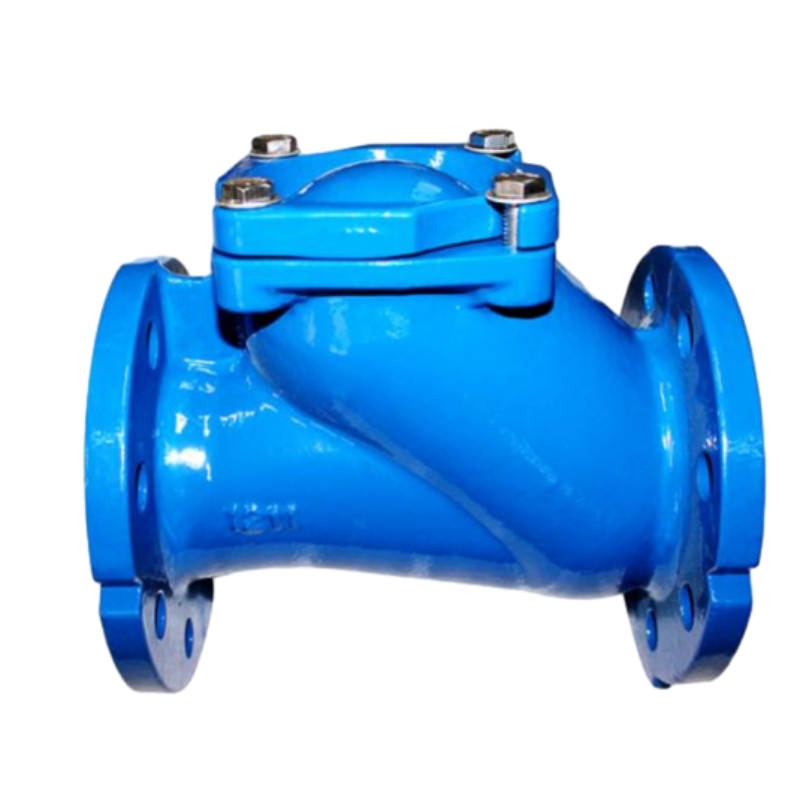
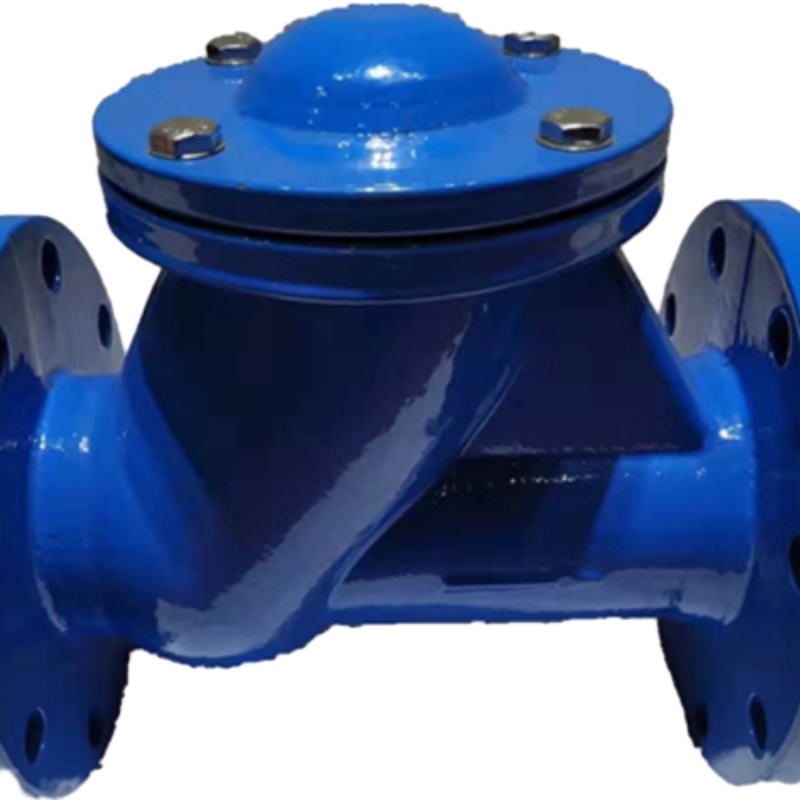
Product snapshot: Ball Check Valve (multi-ball, multi-channel)
Origin: No.17, Building 11, Hardware Building Material City, Botou, Cangzhou City, Hebei Province, China. This check valve uses a rubber-coated ball and a cone body to allow one-way flow with very low headloss. Body styles map neatly to classic ball valve body types: one-piece (compact), two-piece split (maintenance-friendly), and top-entry (fast ball access).
| Spec | Typical Value (≈, real-world use may vary) |
|---|---|
| Size Range | DN25–DN400 (1"–16") |
| Pressure Class | PN10/PN16, Class 150 |
| Body Materials | Ductile iron, WCB, CF8/CF8M |
| Ball / Seat | Rubber-coated ball (EPDM/NBR), metal body seat |
| End Connection | EN 1092-1 / ASME B16.5 flanged |
| Temp Range | -10 to 120°C (elastomer-dependent) |
| Leakage Class | ISO 5208 Rate A / API 598 seat test |
| Service Life | ≈ 10–15 years on clean water; shorter on abrasive slurries |
Where it’s used (and why)
Wastewater lift stations, mining tailings, paper stock lines, stormwater sumps, seawater intake. Advantages: low cracking pressure, quiet closure, and fewer clogging points. I guess that’s why operators keep asking for the top-entry split-family of ball valve body types—easy inspection without pulling the line apart.
Process flow and testing
Materials selection → casting/machining → elastomer ball vulcanization → surface treatment (epoxy ≈250 μm) → assembly → hydrostatic shell test (1.5× rated), seat test (1.1×) per ISO 5208/API 598 → visual/NDT as needed → packing. Typical data: shell test zero visible leakage; seat leakage Rate A; ΔP at crack open ≈ 0.02–0.05 bar.
Vendor comparison (field-notes)
| Vendor | Lead Time | Customization | Certs | Notes |
|---|---|---|---|---|
| STR Machinery | ≈ 3–6 weeks | Body type, coating, elastomer | ISO 9001, CE (PED) | Witness testing per API 598 available |
| Vendor A | 4–8 weeks | Limited elastomer options | ISO 9001 | Budget-friendly, fewer sizes |
| Vendor B | 6–10 weeks | Coatings only | ISO 9001, WRAS | Good documentation, pricier |
Customization tips
For abrasives, specify CF8M body and NBR ball with higher durometer. For seawater, epoxy ≥ 300 μm or duplex options. If downtime is expensive, choose a split-body or top-entry variant of ball valve body types and ask for guided ball cages.
Quick case study
A municipal plant swapped swing checks for ball checks on a rag-prone lift station. Result: clog calls fell by ≈70% over six months; energy dipped ≈3% thanks to lower cracking pressure. Operators liked the top-entry body—15-minute inspections, no pipe spreading. Simple, but it worked.
Standards and compliance: API 598/ISO 5208 testing; ASME B16.5 flanges; ASME B16.34 pressure-temperature framework; material sour-service options per NACE MR0175/ISO 15156; factory QMS per ISO 9001.
- API 598: Valve Inspection and Testing.
- ISO 5208: Industrial valves—Pressure testing of metallic valves.
- ASME B16.34: Valves—Flanged, Threaded, and Welding End.
- NACE MR0175/ISO 15156: Materials for H2S-containing environments.
- ISO 9001: Quality management systems.
-
Ultimate Guide to Using a Professional Metre Spirit LevelNewsApr.16,2026
-
Ultimate Guide to Using and Choosing a Meter Spirit LevelNewsApr.09,2026
-
A Comprehensive Guide to Selecting the Ideal Meter Long Spirit Level for Accurate MeasurementsNewsApr.07,2026
-
Choosing the Perfect Metal Spirit Level for Accurate Measurements and ProjectsNewsApr.04,2026
-
Exploring the Diverse Levels of Spirits Quality and Production TechniquesNewsMar.31,2026
-
Understanding the Precision of a Level Spirit Level for Accurate MeasurementsNewsMar.28,2026
 Afrikaans
 Albanian
 Amharic
 Arabic
 Armenian
 Azerbaijani
 Basque
 Belarusian
 Bengali
 Bosnian
 Bulgarian
 Catalan
 Cebuano
 Corsican
 Croatian
 Czech
Czech
 Danish
 Dutch
Dutch
 Esperanto
 Estonian
 Finnish
 French
 Frisian
 Galician
 Georgian
 German
 Greek
Greek
 Gujarati
 Haitian Creole
 Hausa
Hausa
 Hawaiian
 Hebrew
 Hindi
Hindi
 Miao
Miao
 Hungarian
 Icelandic
 Igbo
Igbo
 Indonesian
 Irish
Irish
 Italian
 Japanese
 Javanese
 Kannada
 Kazakh
 Khmer
Khmer
 Rwandese
 Korean
 Kurdish
 Kyrgyz
 Lao
Lao
 Latin
Latin
 Latvian
 Lithuanian
 Luxembourgish
 Macedonian
 Malgashi
 Malay
Malay
 Malayalam
 Maltese
 Maori
Maori
 Marathi
 Mongolian
 Myanmar
 Nepali
 Norwegian
 Norwegian
 Occitan
 Pashto
 Persian
 Polish
 Portuguese
 Punjabi
 Romanian
 Russian
 Samoan
 Scottish Gaelic
 Serbian
 Sesotho
 Shona
Shona
 Sindhi
 Sinhala
 Slovak
 Slovenian
 Somali
 Spanish
 Sundanese
 Swahili
 Swedish
 Tagalog
 Tajik
Tajik
 Tamil
Tamil
 Tatar
Tatar
 Telugu
 Thai
Thai
 Turkish
 Turkmen
 Ukrainian
 Urdu
Urdu
 Uighur
 Uzbek
Uzbek
 Vietnamese
 Welsh
Welsh
 Bantu
Bantu
 Yiddish
 Yoruba
 Zulu
Zulu
 English