

Mar . 21, 2026 01:45 Back to list
Understanding the Precision and Application of a Horizontal Spirit Level
Understanding the Precision of a Horizontal Spirit Level
In a multitude of trades and DIY projects, achieving accuracy is paramount. A horizontal spirit level is an essential tool for ensuring surfaces are perfectly level. This article will delve into the importance of spirit levels, the different types available, key features to consider, and how to choose the right one for your needs. From construction to interior design, understanding the nuances of a spirit level is crucial for professional and hobbyist alike. Investing in a quality level ensures projects are completed safely and to the highest standards.
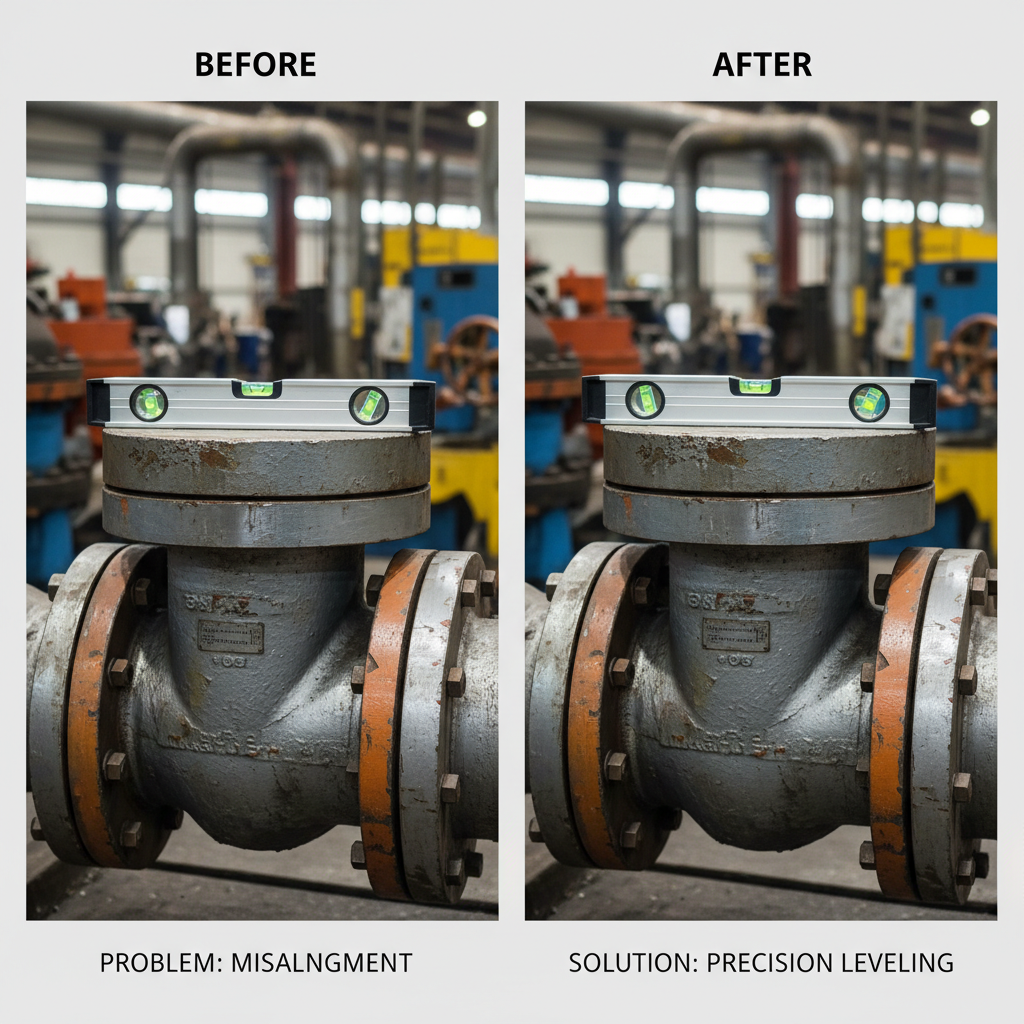
Why is a Horizontal Spirit Level Important?
A horizontal spirit level, at its core, utilizes the principle of gravity to indicate whether a surface is perfectly level. This is critical in construction for laying foundations, installing flooring, and ensuring walls are plumb. In carpentry, it’s essential for accurate cuts and secure joins. Even seemingly simple tasks like hanging pictures or shelving require a level surface for a professional finish. Using an inaccurate or low-quality level can lead to structural issues, aesthetic imperfections, and potentially unsafe conditions. SR Machinery offers a range of precision tools, including spirit levels, designed for accuracy and durability.
Key Takeaway: Proper leveling is fundamental to structural integrity and aesthetic quality in any construction or DIY project.
Types of Horizontal Spirit Levels
There's a diverse range of spirit levels available, each suited for specific applications. Traditional spirit levels feature glass vials filled with liquid, typically alcohol or mineral spirit, containing a bubble that centers when the surface is level. Digital levels utilize electronic sensors to display angles with greater precision. Laser levels project a visible line for leveling over longer distances. Torpedo levels are compact, ideal for tight spaces, while post levels are designed for checking the plumb of vertical structures. Selecting the right type depends on the project’s scale, accuracy requirements, and working conditions.
Level Type Comparison:
• Traditional: Reliable, affordable, no batteries required.
• Digital: High precision, angle readouts, often with memory functions.
• Laser: Long-distance leveling, versatile for various applications.
• Torpedo: Compact, for tight spaces and vertical applications.
Key Features to Look for in a Horizontal Spirit Level
When choosing a horizontal spirit level, several features are crucial. Accuracy is paramount – look for levels with a specified accuracy rating (e.g., ±0.5mm per meter). Durability is also important, especially for construction sites. Consider levels with a solid frame (aluminum or cast iron) and shock-absorbing end caps. Vial visibility is key, particularly in low-light conditions; illuminated vials or high-contrast vials improve readability. Magnetic levels are useful for working with metal surfaces, allowing hands-free operation. Finally, consider the length of the level – longer levels provide greater stability and accuracy over longer distances.
Choosing the Right Horizontal Spirit Level for Your Needs
The optimal spirit level depends on your specific application. For general home improvement tasks, a 24-inch or 48-inch traditional spirit level is often sufficient. Construction professionals working on large-scale projects may benefit from longer levels (60-inch or longer) for increased stability and accuracy. If you work with metal frequently, a magnetic level is a valuable asset. Digital and laser levels are ideal for tasks requiring extreme precision or leveling over long distances. SR Machinery's selection caters to a wide spectrum of needs, ensuring you find the perfect level for any job.
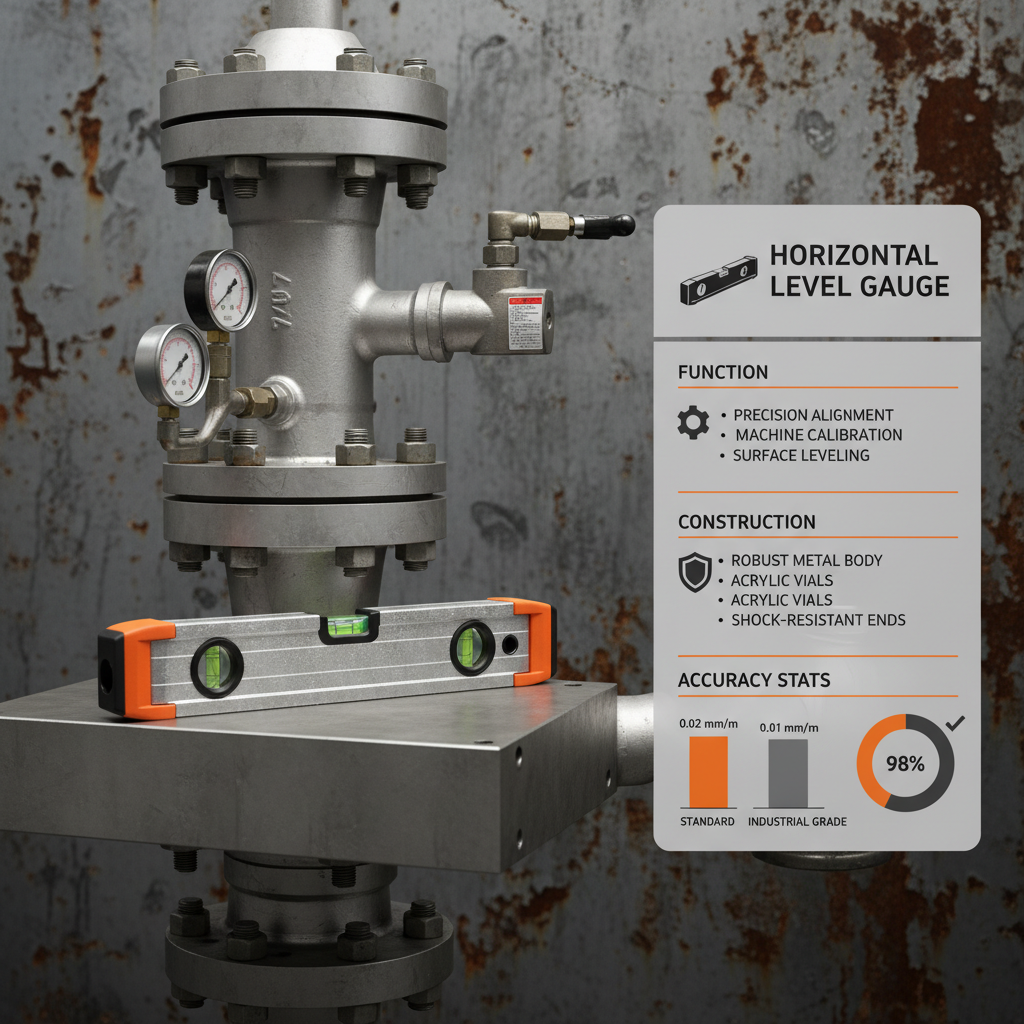
Maintaining and Calibrating Your Spirit Level
To ensure long-lasting accuracy, proper maintenance is vital. Avoid dropping or subjecting the level to harsh impacts. Keep the surface clean and free from debris. Periodically check the calibration of your spirit level. This can be done by placing the level on a known flat surface and observing the bubble’s position. If the bubble doesn’t center, the level may need to be adjusted or replaced. For digital levels, replace batteries as needed. Following these simple steps will help maintain the accuracy and reliability of your spirit level for years to come.
Conclusion: Investing in Accuracy
A horizontal spirit level is an indispensable tool for anyone undertaking projects where precision is key. Choosing the right level, understanding its features, and maintaining it properly will guarantee accurate results and a professional finish. Don’t compromise on quality; invest in a reliable spirit level from a trusted source like SR Machinery and elevate the quality of your work.
Frequently Asked Questions (FAQs)
What’s the difference between a vial level and a digital level?
Vial levels utilize a sealed vial with a bubble that centers when the surface is level, relying on gravity. They are generally more affordable and don't require batteries. Digital levels, on the other hand, employ electronic sensors to measure angles and display them numerically. Digital levels often offer higher precision, memory functions to store readings, and the ability to convert between different units of measurement. The choice depends on the level of accuracy and features you need for your specific tasks.
How do I calibrate a spirit level?
Calibrating a spirit level typically involves placing it on a known flat surface. If the bubble doesn't center, the level is out of calibration. Some levels have adjustment screws that allow you to subtly adjust the vial until the bubble centers. For digital levels, refer to the manufacturer's instructions, as calibration procedures vary. If you're unable to calibrate the level yourself, it may be best to replace it.
What does level length impact accuracy?
The length of a spirit level directly impacts its accuracy. A longer level distributes errors over a greater distance, resulting in more accurate readings. This is because any slight imperfections in the surface being leveled have less of a cumulative effect. For longer spans, always use a longer level to minimize errors and ensure a truly level surface.
Are laser levels more accurate than traditional spirit levels?
Laser levels generally offer higher accuracy over longer distances compared to traditional spirit levels. However, the accuracy of a laser level depends on factors such as the quality of the laser, the stability of the surface it's placed on, and potential interference. Traditional spirit levels, when properly maintained, can be highly accurate for shorter distances and are less susceptible to external influences.
-
Ultimate Guide to Using a Professional Metre Spirit LevelNewsApr.16,2026
-
Ultimate Guide to Using and Choosing a Meter Spirit LevelNewsApr.09,2026
-
A Comprehensive Guide to Selecting the Ideal Meter Long Spirit Level for Accurate MeasurementsNewsApr.07,2026
-
Choosing the Perfect Metal Spirit Level for Accurate Measurements and ProjectsNewsApr.04,2026
-
Exploring the Diverse Levels of Spirits Quality and Production TechniquesNewsMar.31,2026
-
Understanding the Precision of a Level Spirit Level for Accurate MeasurementsNewsMar.28,2026
 Afrikaans
 Albanian
 Amharic
 Arabic
 Armenian
 Azerbaijani
 Basque
 Belarusian
 Bengali
 Bosnian
 Bulgarian
 Catalan
 Cebuano
 Corsican
 Croatian
 Czech
Czech
 Danish
 Dutch
Dutch
 Esperanto
 Estonian
 Finnish
 French
 Frisian
 Galician
 Georgian
 German
 Greek
Greek
 Gujarati
 Haitian Creole
 Hausa
Hausa
 Hawaiian
 Hebrew
 Hindi
Hindi
 Miao
Miao
 Hungarian
 Icelandic
 Igbo
Igbo
 Indonesian
 Irish
Irish
 Italian
 Japanese
 Javanese
 Kannada
 Kazakh
 Khmer
Khmer
 Rwandese
 Korean
 Kurdish
 Kyrgyz
 Lao
Lao
 Latin
Latin
 Latvian
 Lithuanian
 Luxembourgish
 Macedonian
 Malgashi
 Malay
Malay
 Malayalam
 Maltese
 Maori
Maori
 Marathi
 Mongolian
 Myanmar
 Nepali
 Norwegian
 Norwegian
 Occitan
 Pashto
 Persian
 Polish
 Portuguese
 Punjabi
 Romanian
 Russian
 Samoan
 Scottish Gaelic
 Serbian
 Sesotho
 Shona
Shona
 Sindhi
 Sinhala
 Slovak
 Slovenian
 Somali
 Spanish
 Sundanese
 Swahili
 Swedish
 Tagalog
 Tajik
Tajik
 Tamil
Tamil
 Tatar
Tatar
 Telugu
 Thai
Thai
 Turkish
 Turkmen
 Ukrainian
 Urdu
Urdu
 Uighur
 Uzbek
Uzbek
 Vietnamese
 Welsh
Welsh
 Bantu
Bantu
 Yiddish
 Yoruba
 Zulu
Zulu
 English