

Feb . 20, 2026 01:45 Back to list
Precision Work with Durable Granite Small Tools for Optimal Results
Choosing the Right Granite Small Tools for Precision Work
When undertaking projects that demand precision and quality, having the right granite small tools is essential. These tools, renowned for their stability and accuracy, are favored across various industries, from stone fabrication to metrology. This article explores the benefits, applications, and key considerations when selecting granite small tools. We will delve into how these tools contribute to enhanced precision and efficiency in your workflows.
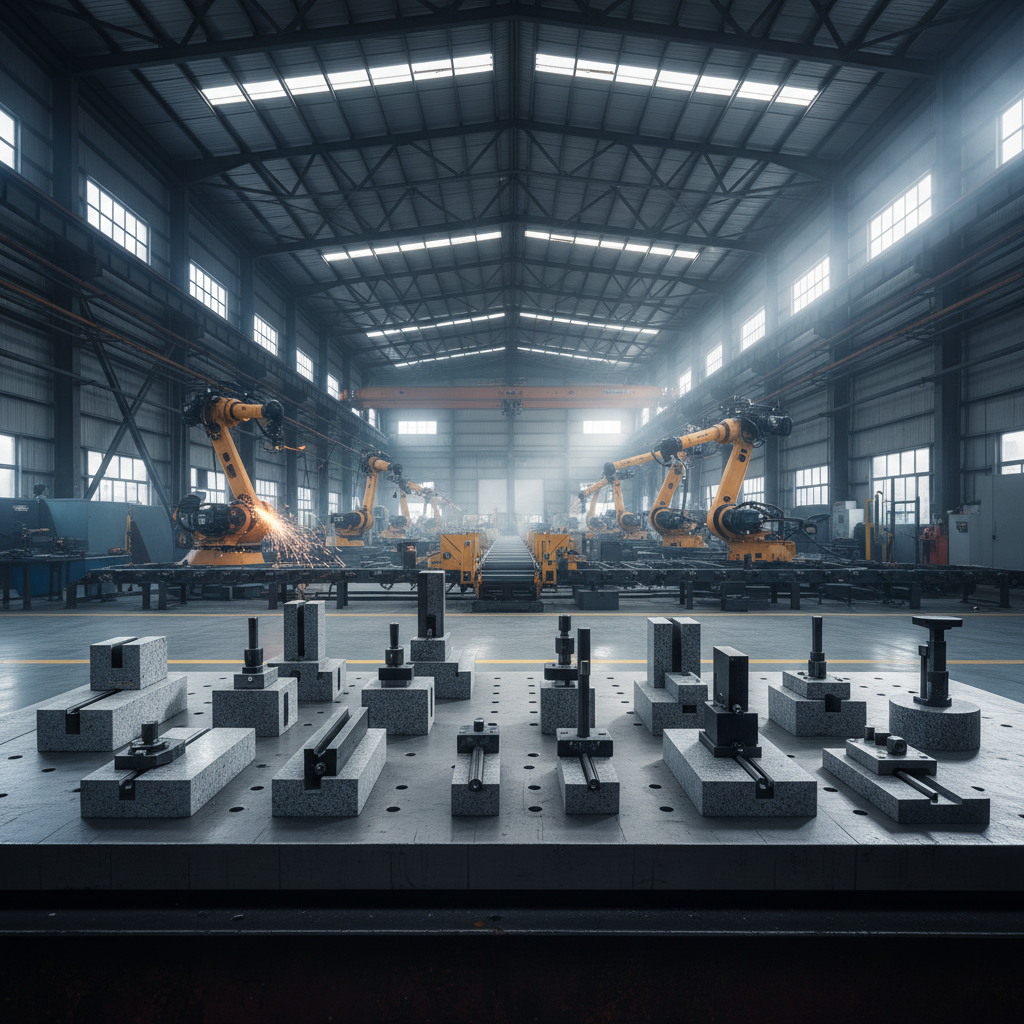
The Unique Advantages of Granite in Toolmaking
Granite's inherent properties make it ideal for crafting precision tools. Its exceptional hardness, rigidity, and dimensional stability minimize vibrations and ensure accurate measurements. Unlike metal, granite doesn't expand or contract significantly with temperature changes, making it suitable for critical applications. Furthermore, granite is non-magnetic, which is crucial in environments where magnetic interference could compromise accuracy. SR Machinery specializes in delivering high-quality granite tools designed for these exacting requirements.
Key Benefits: Exceptional hardness, rigidity, dimensional stability, non-magnetic properties, resistance to temperature fluctuations.
Common Applications of Granite Small Tools
The versatility of granite small tools leads to wide-ranging application across various sectors. In precision engineering, they're used as bases for machine tools, ensuring accurate alignment and minimizing errors. The stone industry utilizes granite tools for cutting, shaping, and polishing stone materials. Metrology labs rely on granite surface plates for accurate calibration and measurement of components. Additionally, they find use in optics, semiconductor manufacturing, and scientific research.
Application Areas:
• Precision Engineering
• Stone Fabrication
• Metrology and Calibration
• Optics and Semiconductor Manufacturing
Choosing the Right Granite Small Tools: Key Considerations
Selecting the appropriate granite small tools requires careful consideration of several factors. The intended application dictates the necessary size, shape, and grade of granite. Accuracy requirements also influence the choice; higher precision applications demand finer-grained granite. It's also important to consider the flatness and surface finish of the tool. Purchasing from a reputable supplier like SR Machinery ensures quality and reliability.
Maintaining Your Granite Tools for Longevity
Proper maintenance ensures the longevity and accuracy of your granite small tools. Avoid dropping or subjecting them to sudden impacts. Clean them regularly with a mild detergent and water, avoiding harsh chemicals. Store the tools in a dry, stable environment, away from direct sunlight and extreme temperatures. Periodic inspection for chips, cracks, or wear is also recommended.

Conclusion: Investing in Precision with Granite Tools
Investing in high-quality granite small tools from a trusted provider like SR Machinery is an investment in precision, efficiency, and long-term reliability. By understanding the unique advantages of granite and carefully selecting the right tools for your application, you can significantly enhance the quality and accuracy of your work.
Frequently Asked Questions (FAQs)
What types of granite are most commonly used for precision tools?
Several types of granite are favored for toolmaking, including Black Granite (India Black), Green Granite, and Red Granite. India Black granite is particularly renowned for its exceptional hardness, fine grain structure, and dimensional stability, making it a preferred choice for high-precision applications like surface plates and machine tool bases. Green and Red granites offer good stability and are often used for less demanding applications. The choice depends on the specific accuracy and performance requirements.
How does temperature affect granite tools?
While granite is more thermally stable than metal, it’s not entirely unaffected by temperature changes. Granite expands and contracts slightly with temperature fluctuations, though to a much lesser degree than materials like steel or aluminum. This property makes it ideal for precision work, but it's still crucial to maintain a stable temperature environment where possible. Significant temperature variations can affect measurement accuracy.
Are granite tools suitable for use with all types of materials?
Granite tools are generally compatible with a wide range of materials. However, consider the hardness of the material being worked on. Avoid using granite tools on extremely abrasive materials that could cause excessive wear. Additionally, be mindful of chemical compatibility; some chemicals may react with the granite surface, so avoid prolonged contact with corrosive substances.
-
Ultimate Guide to Using a Professional Metre Spirit LevelNewsApr.16,2026
-
Ultimate Guide to Using and Choosing a Meter Spirit LevelNewsApr.09,2026
-
A Comprehensive Guide to Selecting the Ideal Meter Long Spirit Level for Accurate MeasurementsNewsApr.07,2026
-
Choosing the Perfect Metal Spirit Level for Accurate Measurements and ProjectsNewsApr.04,2026
-
Exploring the Diverse Levels of Spirits Quality and Production TechniquesNewsMar.31,2026
-
Understanding the Precision of a Level Spirit Level for Accurate MeasurementsNewsMar.28,2026
 Afrikaans
 Albanian
 Amharic
 Arabic
 Armenian
 Azerbaijani
 Basque
 Belarusian
 Bengali
 Bosnian
 Bulgarian
 Catalan
 Cebuano
 Corsican
 Croatian
 Czech
Czech
 Danish
 Dutch
Dutch
 Esperanto
 Estonian
 Finnish
 French
 Frisian
 Galician
 Georgian
 German
 Greek
Greek
 Gujarati
 Haitian Creole
 Hausa
Hausa
 Hawaiian
 Hebrew
 Hindi
Hindi
 Miao
Miao
 Hungarian
 Icelandic
 Igbo
Igbo
 Indonesian
 Irish
Irish
 Italian
 Japanese
 Javanese
 Kannada
 Kazakh
 Khmer
Khmer
 Rwandese
 Korean
 Kurdish
 Kyrgyz
 Lao
Lao
 Latin
Latin
 Latvian
 Lithuanian
 Luxembourgish
 Macedonian
 Malgashi
 Malay
Malay
 Malayalam
 Maltese
 Maori
Maori
 Marathi
 Mongolian
 Myanmar
 Nepali
 Norwegian
 Norwegian
 Occitan
 Pashto
 Persian
 Polish
 Portuguese
 Punjabi
 Romanian
 Russian
 Samoan
 Scottish Gaelic
 Serbian
 Sesotho
 Shona
Shona
 Sindhi
 Sinhala
 Slovak
 Slovenian
 Somali
 Spanish
 Sundanese
 Swahili
 Swedish
 Tagalog
 Tajik
Tajik
 Tamil
Tamil
 Tatar
Tatar
 Telugu
 Thai
Thai
 Turkish
 Turkmen
 Ukrainian
 Urdu
Urdu
 Uighur
 Uzbek
Uzbek
 Vietnamese
 Welsh
Welsh
 Bantu
Bantu
 Yiddish
 Yoruba
 Zulu
Zulu
 English