

Oct . 03, 2025 11:20 Back to list
Flow Control Valve Types: Which Cut Costs and Boost Output?
If you work around pumps, the phrase flow control valve types probably sparks opinions. To be honest, most debates boil down to reliability in the real world: does it start soft, stop clean, and kill water hammer without drama? I’ve seen plenty of plants over-spec the valve and under-spec the testing. That’s backwards.
What’s changing in valves right now
Three quick trends: smarter actuation (position feedback as standard, not premium), aggressive water-hammer mitigation as networks age, and a shift to lifecycle-cost buying. Surprisingly, many customers say they’d trade a bit of Cv for quieter shutoff and fewer night-callouts.
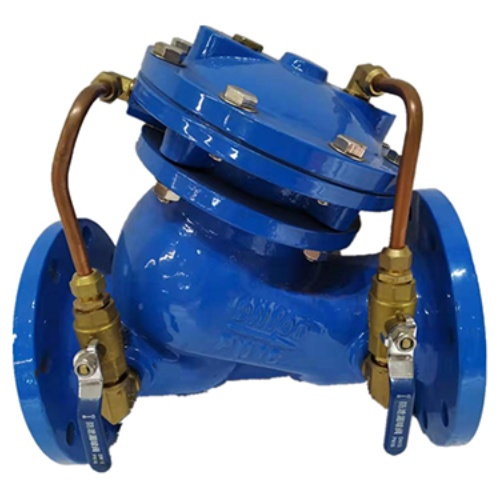
Product snapshot: Control Valve built for pump duty
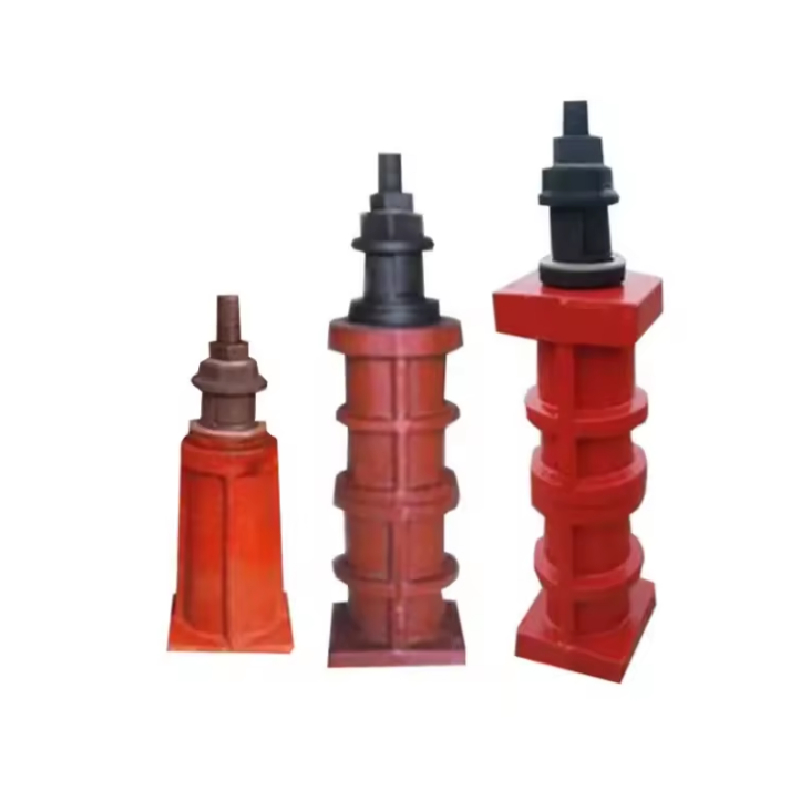
Origin: No.17, Building 11, Hardware Building Material City, Botou, Cangzhou City, Hebei Province, China. This multi‑functional pump control valve combines gate, check, and water‑hammer eliminator functions—one body, three jobs. In practice, that means fewer flanges, fewer leak paths, and simpler commissioning.
| Spec (≈ real-world) | Control Valve |
|---|---|
| Size Range | DN50–DN1200 (2″–48″) |
| Pressure Class | PN10/16/25; Class 150 (others on request) |
| Body/Trim Materials | Ductile iron GJS-500; CF8/CF8M trim options |
| Seat/Seal | EPDM/NBR; metal-seated option for hot service |
| Ends | Flanged EN 1092-1 / ASME B16.5 |
| Actuation | Manual, electric, or hydraulic pilot with damping |
| Leakage Rate | ISO 5208 Rate A (soft seat) ≈ zero visible |
| Coating | Fusion-bonded epoxy, ≥250 μm; salt-spray ≥480 h |
Process, testing, and service life
- Materials: certified heats with 3.1 traceability; elastomers WRAS/NSF options.
- Methods: CNC body machining, precision seat lapping, hydro damping calibration.
- Testing: API 598 / ISO 5208; shell at 1.5× PN, seat at 1.1× PN; torque/actuation curve recorded.
- Standards: ASME B16.34 for design; EN 1092-1 flanges; ISO 15848 fugitive emissions (on request).
- Service life: around 20–30 years in treated water; cycle testing ≥200,000 open/close (factory data).
- Industries: municipal water, irrigation, HVAC/chilled water, desalination, mining process water, fire pump discharge.
Where it wins in the field
Applications include pump discharge anti-slam, non-return with soft-start, and surge suppression without separate surge tanks. Advantages: fewer components, faster commissioning, and calmer transients. A maintenance lead told me, “After midnight, quiet valves are gold.” Couldn’t agree more.
Vendor snapshot (because procurement asks)
| Vendor | Lead Time | Certs | Customization Depth | Price Index |
|---|---|---|---|---|
| STR Machinery | 4–8 weeks (stock on DN≤300) | ISO 9001; CE; WRAS/NSF on request | High: trim, elastomers, actuation, coatings | $$ (competitive) |
| Vendor A | 10–12 weeks | ISO 9001 | Medium | $$$ |
| Vendor B | 6–9 weeks | ISO 9001; CE | Medium–High | $$ |
Customization (because no two pump rooms are alike)
Options: EPDM vs. NBR, stainless trims for brackish water, equal‑percentage or linear control characteristics, EN/ASME drilling, smart positioners, and private‑label nameplates. Real-world use may vary, so pilot valves and damping orifices are tuned per pump curve—don’t skip that step when evaluating flow control valve types.
Quick case study
A North China municipal station (2023) replaced a gate + check + surge relief combo with one multi‑function control valve on each 450 kW pump. Result: transient peak pressures dropped ≈38%, nuisance check‑slam alarms went to zero, and pump restarts fell by 20%. Payback: about 14 months on reduced maintenance and energy smoothing. Feedback? “Install‑and‑forget,” they joked—though they keep spares just in case.
When shortlisting flow control valve types, insist on witnessed testing to API 598/ISO 5208 and get the actuation curve. It’s the story behind the spec sheet.
- API 598 – Valve Inspection and Testing.
- ISO 5208 – Industrial valves — Pressure testing of metallic valves.
- ASME B16.34 – Valves — Flanged, Threaded, and Welding End.
- EN 1092-1 – Flanges and their joints.
- AWWA C508 – Swing-Check Valves for Waterworks Service; see also AWWA guidance on surge control.
-
Ball Check Valve Questions About Connection, Parts and MaintenanceNewsNov.02,2026
-
Butterfly Valve Wholesale FAQ: Types, Specifications & Selection QuestionsNewsOct.28,2026
-
Choosing Guide Rail: Application Fit and Specification ChecksNewsOct.23,2026
-
Choosing a Measuring Micrometer: Application Fit and Specification ChecksNewsOct.23,2026
-
Choosing a Level Ruler: Application Fit and Specification ChecksNewsOct.23,2026
-
Choosing a Ring Gauge: Application Fit and Specification ChecksNewsOct.23,2026
 Afrikaans
 Albanian
 Amharic
 Arabic
 Armenian
 Azerbaijani
 Basque
 Belarusian
 Bengali
 Bosnian
 Bulgarian
 Catalan
 Cebuano
 Corsican
 Croatian
 Czech
 Danish
 Dutch
 Esperanto
 Estonian
 Finnish
 French
 Frisian
 Galician
 Georgian
 German
 Greek
 Gujarati
 Haitian Creole
 Hausa
 Hawaiian
 Hebrew
 Hindi
 Miao
 Hungarian
 Icelandic
 Igbo
 Indonesian
 Irish
 Italian
 Japanese
 Javanese
 Kannada
 Kazakh
 Khmer
 Rwandese
 Korean
 Kurdish
 Kyrgyz
 Lao
 Latin
 Latvian
 Lithuanian
 Luxembourgish
 Macedonian
 Malgashi
 Malay
 Malayalam
 Maltese
 Maori
 Marathi
 Mongolian
 Myanmar
 Nepali
 Norwegian
 Norwegian
 Occitan
 Pashto
 Persian
 Polish
 Portuguese
 Punjabi
 Romanian
 Russian
 Samoan
 Scottish Gaelic
 Serbian
 Sesotho
 Shona
 Sindhi
 Sinhala
 Slovak
 Slovenian
 Somali
 Spanish
 Sundanese
 Swahili
 Swedish
 Tagalog
 Tajik
 Tamil
 Tatar
 Telugu
 Thai
 Turkish
 Turkmen
 Ukrainian
 Urdu
 Uighur
 Uzbek
 Vietnamese
 Welsh
 Bantu
 Yiddish
 Yoruba
 Zulu
 English