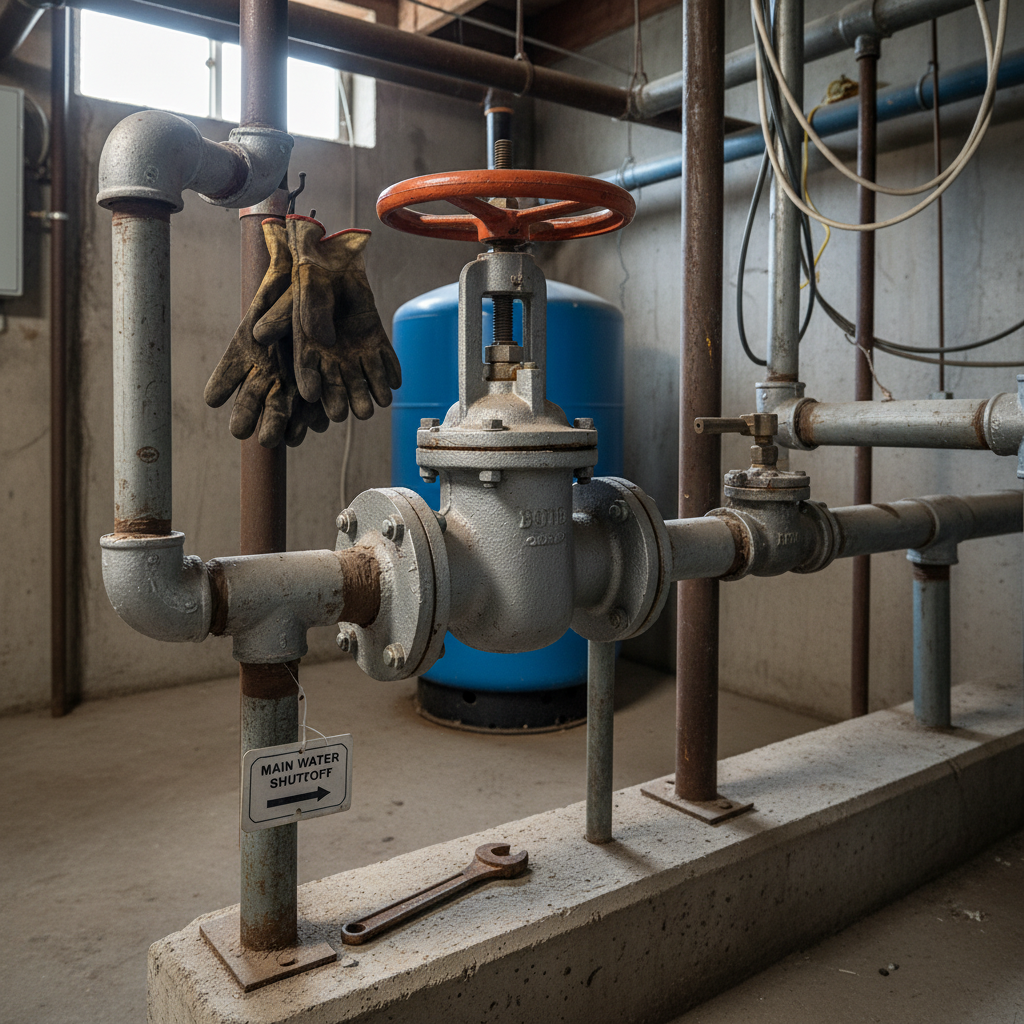
In the complex landscape of industrial fluid control, the search for a competitive 1 2 inch gate valve price often reveals a significant tension between upfront procurement costs and long-term operational reliability. For engineers in the metal sealing and fastener manufacturing sectors, the valve is not merely a commodity but a critical boundary component that ensures system integrity under varying pressure gradients.
Understanding the price architecture of these components requires a deep dive into material science and precision engineering. When budgets are tight, the temptation to optimize for the lowest unit cost can lead to premature seal failure or leakage, which in turn triggers costly unplanned downtime. The industry is currently shifting toward a "Total Cost of Ownership" (TCO) model, where durability and maintenance cycles are weighted more heavily than the initial purchase price.
This analysis explores the technical drivers that influence pricing for 1.2-inch gate valves and provides a framework for evaluating performance against cost. By examining the intersection of material specifications and application requirements, we can determine how to achieve the optimal balance of investment and engineering security.


The cost of a gate valve is primarily determined by the precision of its machining and the quality of the casting. In the context of the 1.2-inch specification, the tolerances for the wedge and seat are critical; any deviation can lead to internal leakage or "stiction," where the valve becomes impossible to operate.
Beyond materials, the manufacturing process—whether it is sand casting, investment casting, or CNC machining from forged billets—introduces varying cost layers. Forged valves generally command a higher price but offer superior pressure ratings and structural homogeneity compared to cast alternatives.
Material selection is the most direct lever affecting the 1 2 inch gate valve price. Cast iron is often the baseline for low-pressure, non-corrosive environments, providing a cost-effective solution for general utility. However, in chemical processing or high-humidity manufacturing plants, carbon steel or stainless steel (such as 316L) is mandatory to prevent oxidation and pitting.
The introduction of alloyed components further elevates the price but extends the mean time between failures (MTBF). For instance, Hard-Facing (Stellite) on the seating surfaces significantly reduces wear from abrasive media, ensuring that the valve maintains a bubble-tight shut-off over thousands of cycles.
Buyers must evaluate the corrosive nature of the medium. Using a low-cost cast iron valve in a corrosive environment creates a "false economy," where the initial savings are quickly eclipsed by the cost of emergency replacements and production losses.
The technical challenge of the gate valve lies in the interaction between the gate (wedge) and the seat. Achieving a perfect seal requires extreme flatness and parallelism, often measured in microns.
Engineering teams must decide between flexible-wedge and solid-wedge designs. Flexible wedges accommodate thermal expansion in high-temperature pipelines, reducing the risk of the valve seizing in the open position, though they add mechanical complexity and cost.
When analyzing the value proposition, it is helpful to visualize how different quality tiers impact the overall engineering rating. A "Budget" valve may meet minimum pressure standards but fails in long-term durability, whereas an "Industrial Grade" valve balances cost with a predictable service life.
The following data represents a normalized engineering assessment across different valve tiers, focusing on seal integrity, material durability, and operational smoothness.
In a typical deployment scenario within a metal sealing facility, gate valves are utilized in coolant distribution lines and lubricant systems. Here, the 1 2 inch gate valve price is weighed against the risk of contamination; a leaking valve can introduce air into the system, leading to cavitation in pumps and inconsistent cooling of CNC machinery.
For high-precision environments, the integration of the valve must be paired with proper alignment tools. Using an optical composite image level ensures that the piping is perfectly horizontal, preventing stagnant fluid pockets that could lead to localized corrosion and valve seat degradation.
The industry is moving toward "Smart Valving," where actuators are integrated with sensors to monitor the position and health of the gate. While this significantly increases the initial expenditure, it allows for predictive maintenance, shifting the focus from a static 1 2 inch gate valve price to a dynamic operational cost model.
Material evolution is also playing a role. The development of advanced ceramic coatings and nano-composite seals is promising a future where friction is virtually eliminated, and the service life of a standard valve could be tripled. This would fundamentally change the procurement logic from "price-per-unit" to "price-per-cycle."
Furthermore, the adoption of additive manufacturing (3D printing) for complex internal valve geometries may allow for more efficient flow profiles, reducing turbulence and pressure drops, which in turn lowers the energy requirements of the overall pumping system.
When selecting a supplier, procurement officers should move beyond the quote and request a technical data sheet that specifies the lapping grade of the seat and the material certification (e.g., ASTM or ISO). This ensures that the quoted price corresponds to a verifiable level of quality.
A comprehensive evaluation matrix should include the cost of the valve, the estimated installation time, and the projected maintenance interval. This allows for a calculated ROI analysis, revealing that a premium valve often pays for itself within the first 18 months of operation.
The following matrix provides a comparative guide for different configuration profiles, illustrating how the specification choices impact the intended use case and estimated reliability.
| Configuration Profile | Material Grade | Seal Precision | Recommended Use Case |
|---|---|---|---|
| Basic Profile | Cast Iron/Grey | Standard | Non-critical Utility Water |
| Standard Profile | Carbon Steel | Precision Ground | Industrial Lubrication Lines |
| High-Duty Profile | Alloy Steel | Lapped/Hard-Faced | High-Pressure Steam/Oil |
| Corrosion Profile | Stainless 316L | Ultra-Precision | Chemical Processing Plants |
| Precision Profile | Forged Steel | Mirror-Finished | Aerospace/Medical Grade |
| Baseline Industry | Mixed Metals | Generic | General Facility Maintenance |
The price is primarily driven by material selection (e.g., stainless steel vs. cast iron), the manufacturing method (forged vs. cast), and the precision of the sealing surfaces. Valves requiring mirror-finished seats or hard-facing (such as Stellite) will be more expensive due to the additional lapping and machining hours required to achieve a bubble-tight seal.
Low-grade materials like grey cast iron are prone to oxidation and wear in corrosive environments. While the initial price is low, the Total Cost of Ownership (TCO) increases due to more frequent replacements and the risk of system leaks. High-grade alloys reduce the frequency of maintenance and extend the operational life of the system, resulting in lower long-term costs.
It depends on the design. Standard solid-wedge valves may seize if the temperature fluctuates significantly due to thermal expansion. For high-temperature environments, a flexible-wedge design is recommended as it allows the wedge to adjust to the body's expansion, ensuring the valve remains operable and maintains a tight seal.
Wire-drawing occurs when a high-pressure fluid leaks through a slightly open or imperfectly sealed valve, eroding a narrow channel into the seat. This is common in low-precision valves. High-quality valves with lapped seats prevent this by ensuring a complete, uniform contact area between the gate and the seat.
Proper installation requires precise alignment to avoid mechanical stress on the valve body. Using professional alignment tools, such as a precision level, ensures the valve is installed according to the piping specifications. This prevents misalignment that could cause premature wear on the stem and packing glands.
Maintenance cycles vary by application. For critical systems, a quarterly inspection of the packing gland and a functional test (full open/close) are recommended. In high-abrasion environments, the seats should be inspected annually for wear or erosion to determine if re-lapping is necessary to maintain seal integrity.
The analysis of the 1 2 inch gate valve price demonstrates that the lowest initial cost is rarely the most economical choice for industrial operations. By shifting the focus from procurement price to a TCO model—considering material durability, seal precision, and maintenance intervals—engineers can significantly reduce unplanned downtime and system risk.
Ultimately, the value of a flow control component is found in its ability to perform reliably under stress. Integrating high-precision valves with professional installation standards, including the use of an optical composite image level for alignment, ensures a robust system architecture that supports long-term industrial productivity.

 Afrikaans
 Albanian
 Amharic
 Arabic
 Armenian
 Azerbaijani
 Basque
 Belarusian
 Bengali
 Bosnian
 Bulgarian
 Catalan
 Cebuano
 Corsican
 Croatian
 Czech
 Danish
 Dutch
 Esperanto
 Estonian
 Finnish
 French
 Frisian
 Galician
 Georgian
 German
 Greek
 Gujarati
 Haitian Creole
 Hausa
 Hawaiian
 Hebrew
 Hindi
 Miao
 Hungarian
 Icelandic
 Igbo
 Indonesian
 Irish
 Italian
 Japanese
 Javanese
 Kannada
 Kazakh
 Khmer
 Rwandese
 Korean
 Kurdish
 Kyrgyz
 Lao
 Latin
 Latvian
 Lithuanian
 Luxembourgish
 Macedonian
 Malgashi
 Malay
 Malayalam
 Maltese
 Maori
 Marathi
 Mongolian
 Myanmar
 Nepali
 Norwegian
 Norwegian
 Occitan
 Pashto
 Persian
 Polish
 Portuguese
 Punjabi
 Romanian
 Russian
 Samoan
 Scottish Gaelic
 Serbian
 Sesotho
 Shona
 Sindhi
 Sinhala
 Slovak
 Slovenian
 Somali
 Spanish
 Sundanese
 Swahili
 Swedish
 Tagalog
 Tajik
 Tamil
 Tatar
 Telugu
 Thai
 Turkish
 Turkmen
 Ukrainian
 Urdu
 Uighur
 Uzbek
 Vietnamese
 Welsh
 Bantu
 Yiddish
 Yoruba
 Zulu
 English