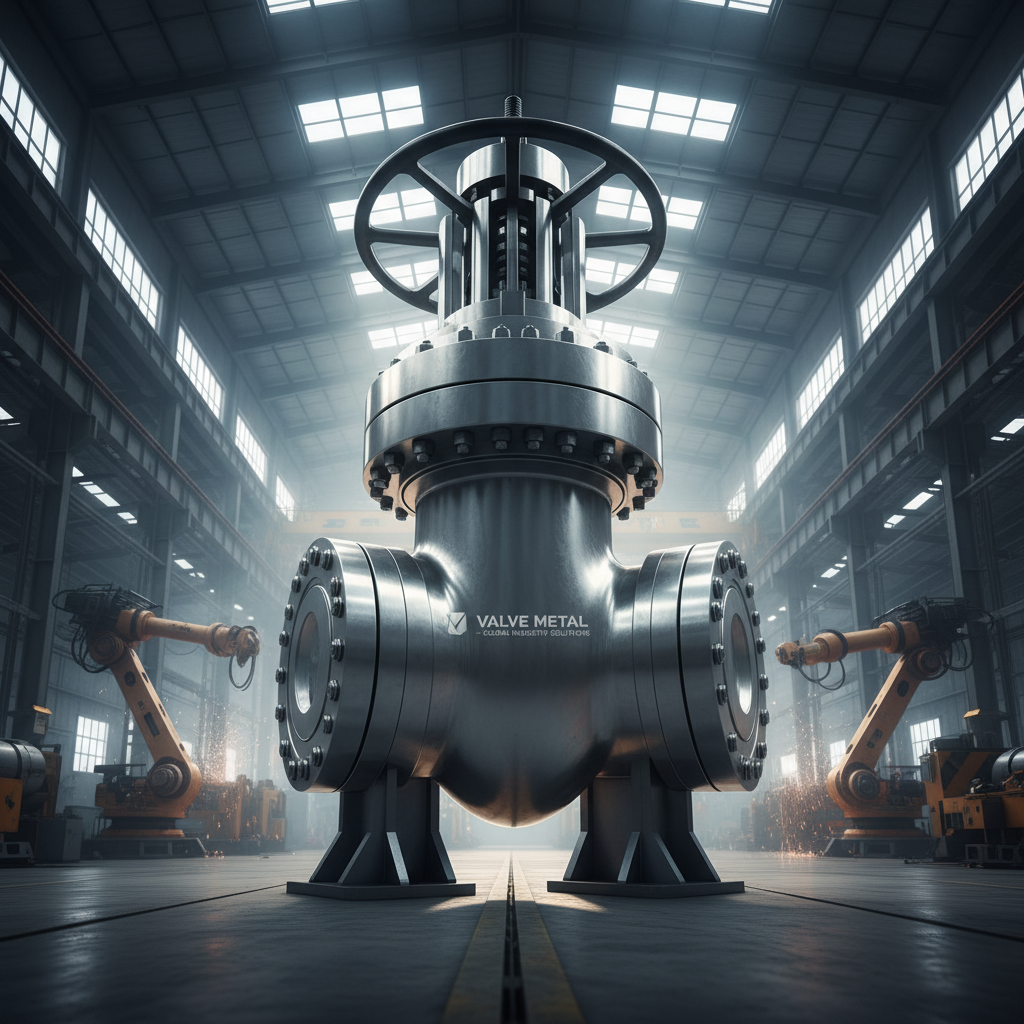
In the complex landscape of industrial fluid control, the role of a professional valve factory extends far beyond simple manufacturing. These facilities serve as the heartbeat of global infrastructure, ensuring that everything from municipal water systems to high-pressure chemical refineries operates with absolute precision and safety. Understanding the nuances of valve production is critical for engineers and procurement officers who prioritize long-term operational stability over short-term cost savings.
The global demand for high-performance flow control solutions has surged as industries shift toward more volatile mediums and extreme operating temperatures. A modern valve factory must now integrate advanced metallurgy with precision machining to prevent catastrophic leaks and ensure environmental compliance. This evolution reflects a broader industrial trend where "good enough" is no longer an option; only rigorous adherence to international standards like ISO and API can guarantee the reliability required for critical applications.
By analyzing the capabilities of a leading valve factory, businesses can better navigate the trade-offs between material durability, actuation speed, and maintenance cycles. Whether it is the deployment of alloy tools for custom fitting or the use of granite measuring tools for micron-level accuracy, the synergy of a well-equipped factory ensures that every component delivered to the site performs exactly as engineered, reducing downtime and enhancing overall system efficiency.


The strategic importance of a valve factory is felt across every continent, as flow control is the invisible backbone of modern civilization. From the desalination plants in the Middle East to the petrochemical complexes in North America, the ability to regulate the flow of liquids and gases with zero failure is a matter of national security and environmental safety. ISO standards have pushed factories to adopt more rigorous testing protocols, ensuring that valves can withstand pressures that would shatter inferior components.
Moreover, the integration of specialized measuring tools, such as plug gauges and granite measuring platforms, allows factories to maintain tolerances that were previously impossible. This precision is not merely a technical achievement but a commercial necessity; a deviation of a few microns in a valve seat can lead to leakage, causing millions in lost revenue or, in worst-case scenarios, environmental disasters.
Prioritize certification and calibration. Ensure the factory holds ISO 9001 and API certifications. Check if they use calibrated measuring tools like granite plates and plug gauges for quality control. A transparent factory will provide raw material heat numbers and pressure test certificates for every batch produced, ensuring full traceability and reliability.
Material choice is critical for chemical compatibility. For example, stainless steel 316 is standard for corrosion resistance, while Hastelloy or Monel are used for extreme acidic environments. A professional factory will guide you on material selection based on the medium's pH level and operating temperature to prevent premature pitting or stress corrosion cracking.
Large factories offer economies of scale and standardized quality, making them ideal for common API-spec valves. Boutique shops excel in custom engineering for unique prototypes or extreme niches. For long-term reliability in critical infrastructure, a factory that balances large-scale capacity with a dedicated QC lab usually provides the best total cost of ownership.
Zero-leakage is achieved through a combination of surface finish control and rigorous testing. Factories use precision lapping to ensure the valve seat and disc are perfectly flush. Following machining, each unit is subjected to hydrostatic tests (using water) and pneumatic tests (using air/nitrogen) to verify that no bubbles or drops escape under peak pressure.
Yes, but it requires specialized metallurgy. Hydrogen can permeate standard metals, causing embrittlement. Leading factories use specialized alloys and advanced coatings to create barriers. They also implement stricter sealing tolerances since hydrogen molecules are much smaller than those of natural gas or water, requiring a higher grade of precision machining.
Measuring tools are the only way to verify that a valve meets its technical specifications. Plug gauges verify hole diameters, while granite measuring tools ensure the flatness of flanges. Without these, there is no way to guarantee that a valve will fit perfectly into a pipeline, which prevents costly on-site modifications and potential leak points.
The operational success of any industrial system depends heavily on the precision and reliability of its flow control components. From the initial selection of high-grade alloys to the final micron-level verification using granite measuring tools, a professional valve factory transforms raw materials into critical safety assets. By focusing on material integrity, precision machining, and rigorous testing, these facilities ensure the stability of global infrastructure and the safety of the environment.
Looking forward, the integration of AI-driven predictive maintenance and additive manufacturing will further elevate the standards of valve production. For companies seeking to optimize their operations, the key is to partner with a manufacturer that views valves not as commodities, but as engineered solutions. Prioritizing quality and traceability today is the only way to guarantee operational resilience in the face of tomorrow's industrial challenges. Visit our website: www.strmachinery.com

 Afrikaans
 Albanian
 Amharic
 Arabic
 Armenian
 Azerbaijani
 Basque
 Belarusian
 Bengali
 Bosnian
 Bulgarian
 Catalan
 Cebuano
 Corsican
 Croatian
 Czech
 Danish
 Dutch
 Esperanto
 Estonian
 Finnish
 French
 Frisian
 Galician
 Georgian
 German
 Greek
 Gujarati
 Haitian Creole
 Hausa
 Hawaiian
 Hebrew
 Hindi
 Miao
 Hungarian
 Icelandic
 Igbo
 Indonesian
 Irish
 Italian
 Japanese
 Javanese
 Kannada
 Kazakh
 Khmer
 Rwandese
 Korean
 Kurdish
 Kyrgyz
 Lao
 Latin
 Latvian
 Lithuanian
 Luxembourgish
 Macedonian
 Malgashi
 Malay
 Malayalam
 Maltese
 Maori
 Marathi
 Mongolian
 Myanmar
 Nepali
 Norwegian
 Norwegian
 Occitan
 Pashto
 Persian
 Polish
 Portuguese
 Punjabi
 Romanian
 Russian
 Samoan
 Scottish Gaelic
 Serbian
 Sesotho
 Shona
 Sindhi
 Sinhala
 Slovak
 Slovenian
 Somali
 Spanish
 Sundanese
 Swahili
 Swedish
 Tagalog
 Tajik
 Tamil
 Tatar
 Telugu
 Thai
 Turkish
 Turkmen
 Ukrainian
 Urdu
 Uighur
 Uzbek
 Vietnamese
 Welsh
 Bantu
 Yiddish
 Yoruba
 Zulu
 English