

Sep . 16, 2025 10:15 Retounen nan lis la
Comprehensive Guide to Pin Gauges: Features, Applications, and Industry Standards
Pin gauges are essential tools in modern manufacturing, offering precise and reliable measurements for hole diameters and slot widths. This article provides an in-depth exploration of pin gauges, their technical specifications, applications, and the role of industry standards in ensuring quality. Whether you're a machinist, engineer, or quality control specialist, this guide will help you understand how pin gauges contribute to precision engineering.
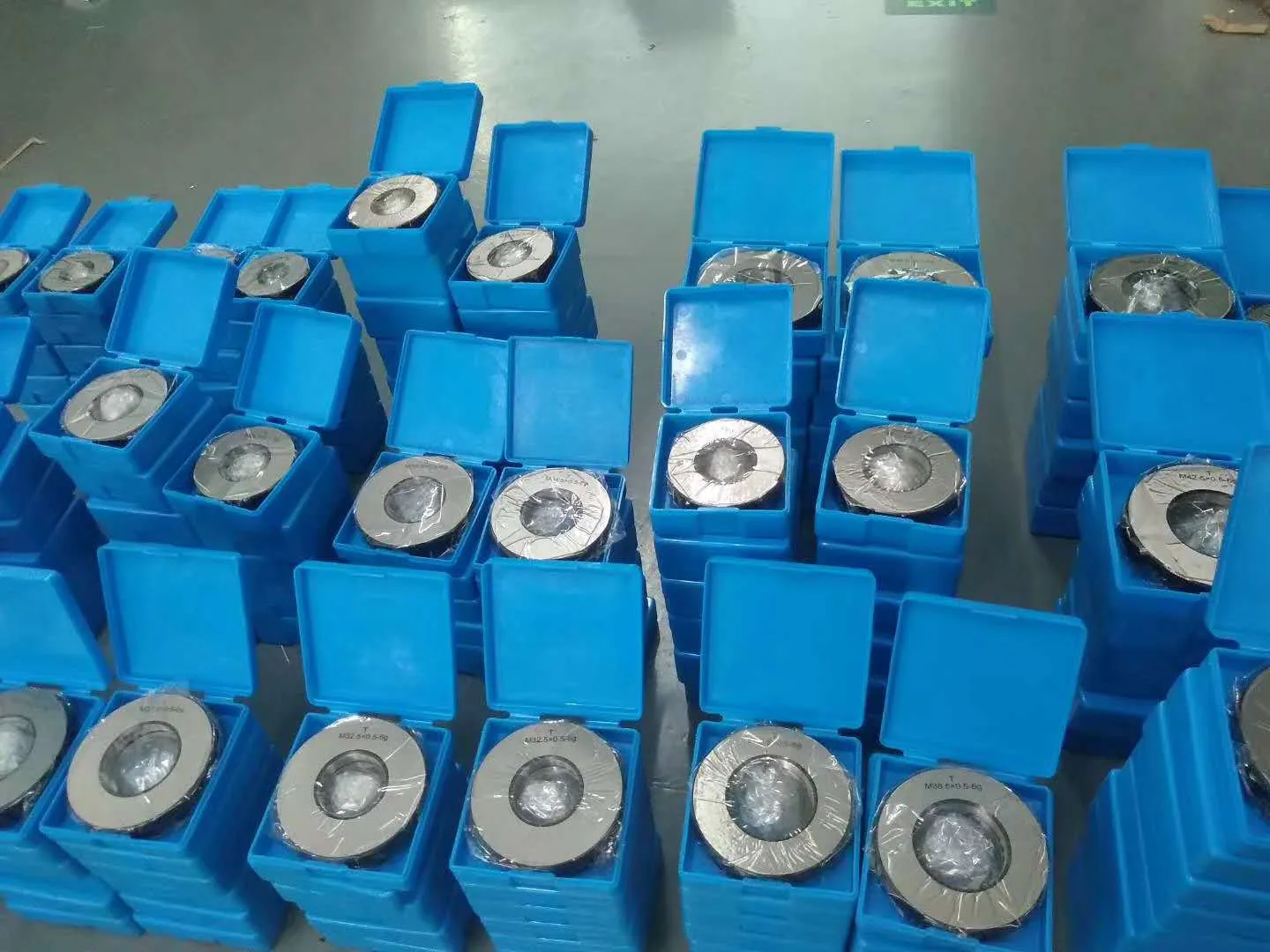
What is a Pin Gauge?
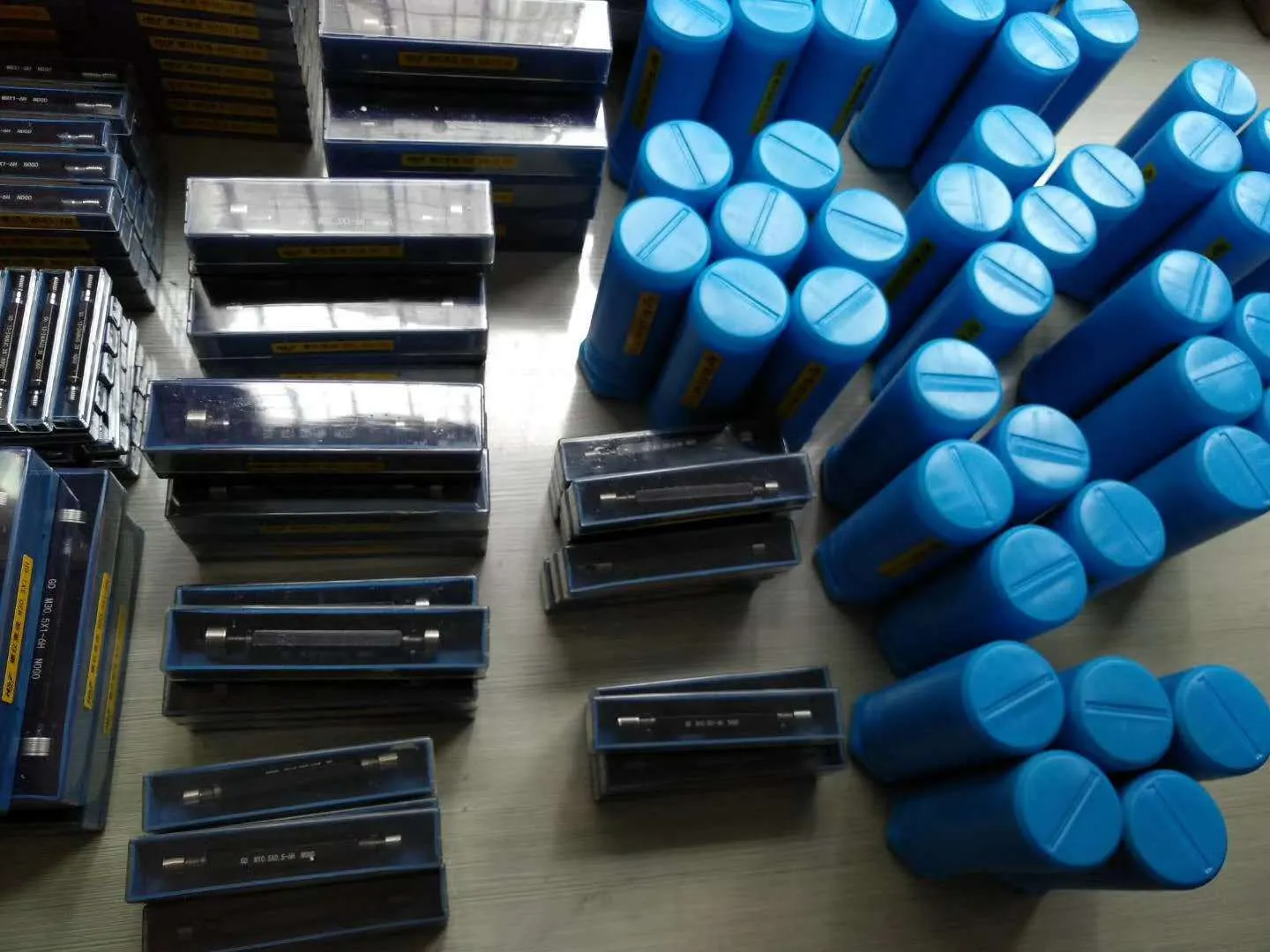
A pin gauge is a cylindrical measuring tool designed to assess the diameter of holes or the width of slots. Typically made from hardened steel or other durable materials, these gauges are engineered to resist wear and deformation, ensuring long-term reliability in demanding environments. Their simplicity and accuracy make them indispensable in industries where precision is critical, such as automotive, aerospace, and manufacturing.
The primary function of a pin gauge is to provide a pass-fail assessment for dimensional tolerances. Unlike calipers or micrometers, which require subjective interpretation, pin gauges offer an objective measurement. When a pin gauge fits snugly into a hole, it confirms the hole's diameter is within acceptable limits. If it does not fit or fits too loosely, further inspection is necessary to identify potential issues. This straightforward approach minimizes human error and streamlines quality control processes.
Types and Classes of Pin Gauges
Pin gauges are categorized into three main classes—A, B, and C—each tailored to specific precision requirements:
- Class A: Manufactured with the highest precision, Class A pin gauges are ideal for applications requiring tight tolerances. They are commonly used for calibrating measuring instruments or validating critical component dimensions in quality control processes.
- Class B: Offering a balance between accuracy and cost-effectiveness, Class B gauges are suitable for general measurement tasks on the shop floor. While less precise than Class A, they remain vital for maintaining consistent quality in production environments.
- Class C: Designed for less demanding applications, Class C gauges serve as quick inspection tools or for rough checks. Their larger tolerances make them less precise but more economical, ideal for situations where high accuracy is not essential.
Key Features and Technical Specifications
Pin gauges are available in a range of sizes and materials to meet diverse industrial needs. The standard pin gauge follows the GB/T1957 specification, with materials such as GCr15 steel ensuring durability. Below is a detailed overview of their technical parameters:
|
Norm |
Size Range (mm) |
|
0.22-1.50 |
22.05-23.72 |
|
1.51-7.70 |
23.73-24.40 |
|
7.71-12.70 |
25.41-30.00 |
|
12.71-15.30 |
— |
|
15.31-17.80 |
— |
|
17.81-20.36 |
— |
|
20.37-22.04 |
— |
These specifications highlight the versatility of pin gauges, which can measure everything from small, high-precision holes to larger, less critical dimensions. The use of hardened steel ensures resistance to wear, while the standardized size ranges facilitate compatibility across industries.
Applications in Manufacturing and Quality Control
Pin gauges play a critical role in quality assurance processes, particularly in industries where precision is paramount. In the automotive sector, for example, they are used to verify the dimensions of engine components, ensuring proper fit and function. Similarly, in aerospace manufacturing, pin gauges help maintain the integrity of critical parts, reducing the risk of mechanical failure.
Beyond direct measurement, pin gauges are also used for calibrating other measuring instruments. This dual functionality makes them invaluable in both production environments and laboratory settings. For instance, calibrated pin gauges are essential for validating the accuracy of micrometers, dial indicators, and coordinate measuring machines (CMMs).
Industry Standards and Regulatory Compliance
The reliability of pin gauges is underpinned by adherence to industry standards. The GB/T1957 specification, referenced in the context, ensures consistency in manufacturing and measurement practices. These standards are developed by organizations such as the National Institute of Standards and Technology (NIST), which plays a pivotal role in establishing measurement benchmarks.
According to NIST, "Standardized measurement tools like pin gauges are crucial for ensuring interoperability and quality in global manufacturing." This statement underscores the importance of compliance with recognized standards to maintain trust and efficiency in industrial processes.
Choosing the Right Pin Gauge for Your Needs
Selecting the appropriate pin gauge depends on factors such as required precision, frequency of use, and budget constraints. For high-accuracy applications, Class A gauges are the preferred choice, while Class B and C gauges offer cost-effective solutions for routine measurements. Additionally, pin gauge sets provide versatility, allowing users to handle a wide range of dimensions without purchasing multiple individual gauges.
Conclusion
Pin gauges are more than just simple measuring tools—they are foundational elements of precision engineering. Their ability to deliver accurate, repeatable measurements makes them indispensable in quality control, calibration, and manufacturing processes. By understanding their features, applications, and industry standards, professionals can leverage pin gauges to enhance productivity and ensure compliance with global quality benchmarks.
References
NIST (National Institute of Standards and Technology). (n.d.). https://www.nist.gov/
GB/T1957 Standard. (n.d.). https://www.strmachinery.com/pin-gauge.html
About the Company
Storaen (Cangzhou) International Trading Co. is a leading provider of precision measurement tools, including pin gauges for sale. With a commitment to quality and innovation, the company serves industries worldwide, offering products that meet the highest standards of accuracy and reliability. For more information, visit their official website.
-
Ultimate Guide to Using a Professional Metre Spirit LevelNouvèlApr.16,2026
-
Ultimate Guide to Using and Choosing a Meter Spirit LevelNouvèlApr.09,2026
-
A Comprehensive Guide to Selecting the Ideal Meter Long Spirit Level for Accurate MeasurementsNouvèlApr.07,2026
-
Choosing the Perfect Metal Spirit Level for Accurate Measurements and ProjectsNouvèlApr.04,2026
-
Exploring the Diverse Levels of Spirits Quality and Production TechniquesNouvèlMar.31,2026
-
Understanding the Precision of a Level Spirit Level for Accurate MeasurementsNouvèlMar.28,2026
 English
 Afrikaans
 Albanian
 Amharic
 Arabic
 Armenian
 Azerbaijani
 Basque
 Belarusian
 Bengali
 Bosnian
 Bulgarian
 Catalan
 Cebuano
 Corsican
 Croatian
 Czech
Czech
 Danish
 Dutch
Dutch
 Esperanto
 Estonian
 Finnish
 French
 Frisian
 Galician
 Georgian
 German
 Greek
Greek
 Gujarati
 Hausa
Hausa
 Hawaiian
 Hebrew
 Hindi
Hindi
 Miao
Miao
 Hungarian
 Icelandic
 Igbo
Igbo
 Indonesian
 Irish
Irish
 Italian
 Japanese
 Javanese
 Kannada
 Kazakh
 Khmer
Khmer
 Rwandese
 Korean
 Kurdish
 Kyrgyz
 Lao
Lao
 Latin
Latin
 Latvian
 Lithuanian
 Luxembourgish
 Macedonian
 Malgashi
 Malay
Malay
 Malayalam
 Maltese
 Maori
Maori
 Marathi
 Mongolian
 Myanmar
 Nepali
 Norwegian
 Norwegian
 Occitan
 Pashto
 Persian
 Polish
 Portuguese
 Punjabi
 Romanian
 Russian
 Samoan
 Scottish Gaelic
 Serbian
 Sesotho
 Shona
Shona
 Sindhi
 Sinhala
 Slovak
 Slovenian
 Somali
 Spanish
 Sundanese
 Swahili
 Swedish
 Tagalog
 Tajik
Tajik
 Tamil
Tamil
 Tatar
Tatar
 Telugu
 Thai
Thai
 Turkish
 Turkmen
 Ukrainian
 Urdu
Urdu
 Uighur
 Uzbek
Uzbek
 Vietnamese
 Welsh
Welsh
 Bantu
Bantu
 Yiddish
 Yoruba
 Zulu
Zulu
 Haitian Creole